
What's inside
As an Amazon Associate I earn from qualifying purchases. This post may contain affiliate links at no extra cost to you.
Stainless steel cooler vs plastic cooler for camping is not a question with one right answer for everyone. A stainless steel cooler is durable, easy to clean, and looks good, but it is heavy and expensive. A plastic cooler is light, cheap, and available in every size, but it can crack, stain, and feel less solid. The right choice depends on how you camp, how far you carry the cooler, and how long you need food to stay cold.
Food safety is the same for both types. Keep food below 40 degrees Fahrenheit, never leave food out for more than 2 hours, or more than 1 hour if it is above 90 degrees, pre-chill the cooler and the food before you pack it, and use a 2 to 1 ratio of ice to food by volume for a long trip. A cooler that is not pre-chilled will melt ice faster, no matter what it is made of. A cooler that is opened every 10 minutes will lose cold air, no matter how thick its walls are.
Our top pick for most campers is the YETI Roadie 24, a plastic rotomolded cooler. It is the best overall choice because it is light enough to carry to a campsite, it holds ice well for a weekend, and it is durable enough to sit on, stand on, and load into a car without cracking. Stainless steel is better if you want a cooler that will last a decade and that you do not need to carry far, but for hiking to a site, for a family picnic, and for a car camping trip, a good plastic cooler is the more practical choice.
Our Top Picks
Stainless Steel Cooler vs Plastic Cooler for Camping Compared
The table below compares three stainless steel coolers and three plastic coolers, with capacity, weight, material, and price. Capacity is in quarts. Weight is empty weight. Prices are typical ranges, not fixed prices, and they vary by retailer.
| Model | Material | Capacity | Empty Weight | Typical Price Range | Rating |
|---|---|---|---|---|---|
| YETI Roadie 24 | Plastic, rotomolded | 24 qt | 12.8 lb | $200–$250 | 4.8 / 5 |
| Coleman 54-Quart Stainless Steel Cooler | Stainless steel exterior, plastic interior | 54 qt | 16 lb | $80–$110 | 4.6 / 5 |
| Igloo MaxCold 50 Qt | Plastic | 50 qt | 10 lb | $40–$60 | 4.5 / 5 |
| Stanley Classic Legendary Cooler 16 Qt | Stainless steel | 16 qt | 7 lb | $60–$80 | 4.4 / 5 |
| Coleman 48 Qt Performance Cooler | Plastic | 48 qt | 9 lb | $30–$50 | 4.3 / 5 |
| Engel UC19 Stainless Steel Cooler | Stainless steel | 19 qt | 9 lb | $100–$130 | 4.2 / 5 |

Igloo Stainless Steel Legacy 54QT Cooler
As an Amazon Associate we earn from qualifying purchases. Product prices and availability are accurate as of the date/time indicated.

Coleman Vintage Steel Belted Cooler, 85-Can Capacity, 54-Quart, Red | Vintage Retro Design, Holds up to 85 Cans, Keeps Ice up to 4 Days, Lid Supports 250 Pounds, Rust-Resistant Hardware
As an Amazon Associate we earn from qualifying purchases. Product prices and availability are accurate as of the date/time indicated.

42Qt Stainless Steel Portable Cooler Ice Chest Large Insulated Ice Box | With Reinforced Latches, Triple-Layer Insulation, 24H Cold Hot Retention, Handles, For Camping Beach BBQ Food Freshness


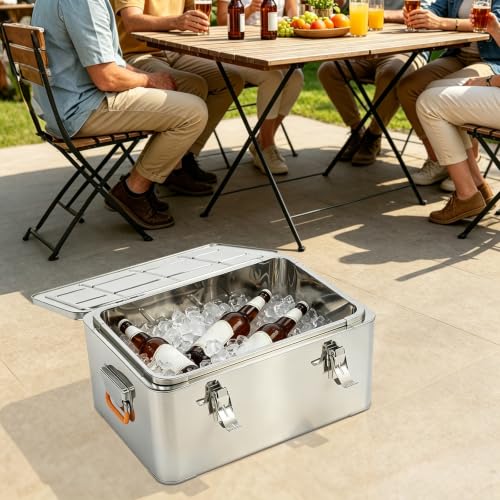


As an Amazon Associate we earn from qualifying purchases. Product prices and availability are accurate as of the date/time indicated.
Prices shown are approximate and for reference only. Prices change often, so please check the current price on Amazon before you buy.
Stainless Steel Cooler vs Plastic Cooler for Camping in 2026: Detailed Reviews
1. YETI Roadie 24 — Best Overall Cooler for Camping, Plastic
The Roadie 24 is a small rotomolded plastic cooler that holds 24 quarts, which is enough for a weekend for two people, or for a day trip for a family. It is 12.8 pounds empty, which is heavy for its size, but it is still light enough to carry with one hand using its shoulder strap or handle. The rotomolded construction means the walls are thick and the lid seals tightly, so it holds ice for several days in moderate weather.
In use, the Roadie 24 is the cooler that gets used most often, because it is the right size for a car, for a campsite, and for a picnic. It fits in a car trunk, it fits between seats, and it can be used as a seat at camp. The latch is simple, the drain plug works, and the non-slip feet keep it from sliding in a car. The main drawback is price: at $200 to $250, it costs four times as much as a basic plastic cooler of the same size. For a camper who camps often and wants a cooler that will last, it is worth it. For a camper who camps twice a year, a cheaper plastic cooler is a better value.
2. Coleman 54-Quart Stainless Steel Cooler — Best Stainless Steel Cooler for Car Camping
Coleman’s 54-quart stainless steel cooler has a stainless steel exterior and a plastic interior, with a hinged lid and a drain. It holds 54 quarts, which is enough for a family for a weekend, with room for food, drinks, and ice at a 2 to 1 ice to food ratio. At 16 pounds empty, it is heavier than a plastic cooler of the same size, but it is still manageable for car camping, where you roll it or carry it a short distance from the car to the site.
The stainless exterior is easy to clean, it does not stain like plastic, and it looks better after years of use. The interior is plastic, so it is not a full stainless cooler, but that also makes it lighter and cheaper than a full stainless model. The lid does not seal as tightly as a rotomolded cooler, so it does not hold ice as long as the YETI Roadie 24. For a weekend trip where you can buy ice on the way, that is not a problem. For a four-day trip without ice, a rotomolded plastic cooler is better.
3. Igloo MaxCold 50 Qt — Best Budget Plastic Cooler for Camping
Igloo’s MaxCold 50 is a basic plastic cooler with a 50-quart capacity, at $40 to $60. It weighs 10 pounds empty, which is light for its size, and it has wheels and a handle on some versions, which makes it easy to roll to a campsite. The insulation is thinner than a rotomolded cooler, so it holds ice for a day or two, not for four days, but that is enough for a weekend if you pre-chill it and use a 2 to 1 ice ratio.
The MaxCold is the cooler to buy if you need a large cooler for a family and you do not want to spend $200. It is also the cooler to buy if you need a second cooler for drinks, so you do not open the food cooler every time someone wants a drink. The lid is not as durable as a rotomolded lid, and the hinges can break if the cooler is dropped, but for normal car camping, it is a practical, cheap choice.
4. Stanley Classic Legendary Cooler 16 Qt — Best Small Stainless Steel Cooler for Camping
Stanley’s 16-quart cooler is a small stainless steel cooler with a latch lid and a handle. It holds 16 quarts, which is enough for lunch and drinks for two people, or for a day hike. At 7 pounds empty, it is light for a stainless cooler, and it is easy to carry by hand.
The stainless construction is durable and easy to clean, and the cooler has a classic look that many campers like. The capacity is small, so it is not a family cooler, and it does not hold ice as long as a larger rotomolded cooler, because it has less insulation and less ice mass. For a day trip, for a picnic, or for keeping a few items cold on a short hike, it is a good choice. For a weekend, you will need a larger cooler as well.
5. Coleman 48 Qt Performance Cooler — Best Cheap Plastic Cooler for Camping
Coleman’s 48-quart Performance cooler is a basic plastic cooler at $30 to $50, with a 48-quart capacity and a 9-pound empty weight. It is the lightest large cooler here, and it is the cheapest. It has a hinged lid, a drain, and cup holders on the lid, which are useful at a campsite.
The Performance cooler holds ice for a day, maybe two if you pre-chill it and keep it in the shade. It is not a long-term ice retention cooler, and it will not survive being stood on like a rotomolded cooler. For a family picnic, for a day at a lake, or for a short camping trip where you can buy ice daily, it is a perfectly good cooler. For a multi-day trip in hot weather, you will need to buy ice more often, or choose a rotomolded cooler.
6. Engel UC19 Stainless Steel Cooler — Best Stainless Steel Cooler for Durability
Engel’s UC19 is a 19-quart stainless steel cooler, at $100 to $130, with a 9-pound empty weight. It is made from stainless steel inside and out, with a thick lid and a latch that seals tightly. It is more durable than the Coleman stainless cooler, and it holds ice a little longer, because the lid seals better.
The UC19 is a good choice if you want a stainless cooler that will last for years and that you will use for day trips and for keeping food cold in a car. The capacity is small, so it is not a family cooler, and the price is high for its size. For a camper who values durability and easy cleaning over capacity, it is a good investment. For a camper who needs a large cooler, a plastic rotomolded cooler is a better value.
Stainless Steel Cooler vs Plastic Cooler for Camping Buying Guide
Choosing between stainless steel and plastic is about weight, durability, ice retention, and price. There is no cooler that is lightest, most durable, best at holding ice, and cheapest at the same time.
Stainless Steel Pros and Cons vs Plastic Pros and Cons for Camping
Stainless steel pros are durability, easy cleaning, no staining, and a solid feel. A stainless cooler does not crack like plastic, it does not absorb odours, and it is easy to wipe clean after a trip. Stainless steel cons are weight, price, and heat. Stainless steel is heavier than plastic for the same size, it costs more, and it can get hot in direct sun, which can warm the cooler if it is left in the sun.
Plastic pros are weight, price, and insulation. A plastic cooler, especially a rotomolded plastic cooler, is lighter than stainless for the same capacity, it is cheaper, and the thick plastic walls insulate well. Plastic cons are durability and staining. Cheap plastic can crack if dropped, it can stain from food and drinks, and it can absorb odours if it is not cleaned promptly.
For most campers, plastic is the better choice, because weight and price matter more than the durability advantage of stainless. For a camper who camps from a car, who does not carry the cooler far, and who wants a cooler that will last a decade, stainless is the better choice.
Ice Retention, Food Safety, and Pre-Chilling a Cooler for Camping
Ice retention depends on insulation, lid seal, and how often you open the cooler. A rotomolded plastic cooler like the YETI Roadie 24 holds ice longer than a thin-walled plastic cooler like the Coleman Performance, and longer than a stainless cooler with a loose lid like the Coleman 54-quart stainless. The best way to improve ice retention, no matter what cooler you buy, is to pre-chill the cooler the night before with ice or with cold packs, to pre-chill food and drinks in a fridge, and to use a 2 to 1 ratio of ice to food by volume.
Food safety is the same for both types. Keep food below 40 degrees Fahrenheit, never leave food out for more than 2 hours, or more than 1 hour if it is above 90 degrees, and keep raw meat separate from ready-to-eat food. Use block ice for longer trips, as it melts slower than cubes, and use a separate cooler for drinks, so you do not open the food cooler every time someone wants a drink.
Store a cooler dry and open after a trip, to prevent mould. Clean it with warm water and soap, dry it in the shade, and store it loose, not compressed. Mould can grow in 24 to 48 hours in a damp, closed cooler, so do not store a wet cooler closed.
Size, Weight, and How to Choose a Cooler Size for Camping
Size depends on group size and trip length. A 16 to 24 quart cooler is enough for one or two people for a day, or for a weekend if you pack carefully. A 48 to 54 quart cooler is enough for a family of four for a weekend. A cooler that is too large will waste ice, because you need to fill empty space with ice. A cooler that is too small will force you to buy ice daily.
Weight matters if you carry the cooler. A 50-quart plastic cooler weighs 10 pounds empty, plus 20 to 30 pounds of ice and food, for a total of 30 to 40 pounds. A 54-quart stainless cooler weighs 16 pounds empty, plus the same ice and food, for a total of 36 to 46 pounds. That difference is noticeable on a walk to a campsite. If you car camp, weight matters less. If you hike to a site, choose the lightest cooler that holds enough food, or use a smaller cooler and a backpack for food.
Stainless Steel Cooler vs Plastic Cooler for Camping FAQ
Which is better for camping, a stainless steel cooler or a plastic cooler?
For most campers, a plastic cooler is better, because it is lighter, cheaper, and holds ice well if it is rotomolded. The YETI Roadie 24, a plastic rotomolded cooler at $200 to $250, is the best overall choice in this guide, because it is light enough to carry, it holds ice for a weekend, and it is durable. A stainless steel cooler is better if you car camp, you do not carry the cooler far, and you want a cooler that is easy to clean and will last for years. The Coleman 54-quart stainless steel cooler at $80 to $110 is the best stainless value for car camping.
Does a stainless steel cooler keep ice longer than a plastic cooler?
A stainless steel cooler does not automatically keep ice longer than a plastic cooler. Ice retention depends on insulation thickness, lid seal, and how often you open the cooler. A rotomolded plastic cooler like the YETI Roadie 24 holds ice longer than a thin-walled stainless cooler like the Coleman 54-quart stainless, because the rotomolded walls are thicker and the lid seals tighter. A full stainless cooler like the Engel UC19 holds ice well for its size, but it is small. Pre-chill the cooler, use a 2 to 1 ice to food ratio, and keep the cooler in the shade to improve ice retention for either type.
How do I keep food safe in a cooler while camping?
Keep food below 40 degrees Fahrenheit, never leave food out for more than 2 hours, or more than 1 hour if it is above 90 degrees, pre-chill the cooler and the food before you pack it, and use a 2 to 1 ratio of ice to food by volume. Keep raw meat separate from ready-to-eat food, use block ice for longer trips, and use a separate cooler for drinks so you do not open the food cooler often. Clean the cooler with warm water and soap after a trip, dry it in the shade, and store it open to prevent mould, which can grow in 24 to 48 hours in a damp, closed cooler.
What size cooler should I buy for camping?
Buy a 16 to 24 quart cooler for one or two people for a day, or for a weekend if you pack carefully. Buy a 48 to 54 quart cooler for a family of four for a weekend. A cooler that is too large wastes ice, and a cooler that is too small forces you to buy ice daily. If you hike to a campsite, choose the lightest cooler that holds enough food. If you car camp, weight matters less, and you can choose a larger stainless steel cooler like the Coleman 54-quart stainless at $80 to $110.
FAQ
Which is better for camping, a stainless steel cooler or a plastic cooler?
Does a stainless steel cooler keep ice longer than a plastic cooler?
How do I keep food safe in a cooler while camping?
What size cooler should I buy for camping?
Related guides
- Best Battery Operated Camping Lights: 6 Best Battery Operated Camping Lights for Tents and Campsites in 2026
- Best Bike Camping Trails in 2026: Six Rail Trails and Towpaths Where the Campsites Come Every Riding Day
- Best Value Camp Kitchen Table Under 100 Dollars in 2026: Roll-Tops, Fold-Flats, and Cook Stations That Earn Their Price by the Third Trip
- Best Outdoor Grill for Beach Camping Use in 2026: Best Outdoor Grill for Beach Camping Use for Safe Cooking, Easy Carry, and Simple Beach Meals
More from Amazon
Programs that pair well with the guide above. Offers and eligibility are set by Amazon and may change.
Free shipping on eligible items, Prime Video and more. Eligible new members can start with a free trial.
Start a Prime free trialA Prime membership for ages 18-24 with a trial period. Eligibility is set by Amazon.
See Prime for Young AdultsAudiobooks and podcasts to listen to on the go. Eligible new members can start with a free trial.
Try Audible freeAd-free music streaming. Eligible new subscribers can start with a free trial.
Try Music Unlimited freeAs an Amazon Associate we earn from qualifying purchases.

Write Your Review
No reviews yet. Be the first to share your experience!