
What's inside
- Best Cooler for Kids Mountain Camping: Safety Rules Before Products
- Best Cooler for Kids Mountain Camping: Quick Comparison
- The Six Best Coolers for Kids’ Mountain Camping Reviewed
- Buying Guide: How to Choose and Pack the Best Cooler for Kids’ Mountain Camping
- Frequently Asked Questions About Coolers for Kids’ Mountain Camping
As an Amazon Associate I earn from qualifying purchases. This post may contain affiliate links at no extra cost to you.
The best cooler for kids mountain camping is chosen at the intersection of three requirements that pull in different directions. It must keep food at a safe temperature, at or below 40 degrees Fahrenheit, through mountain days that swing from a hot noon to a freezing night, at altitudes where the sun is fierce and the nearest shop is an hour down a switchback road. It must be operable by the children it serves, with a lid a seven-year-old can open for a juice box without an adult’s rescue, and latches that do not pinch small fingers or demand a strongman’s thumbs. And it must obey the mountain’s own rules, which are stricter than the valley’s: in bear country, a cooler is not food storage at all unless it is a certified bear-resistant model or it lives where the campground directs, in a bear locker, a hard-sided vehicle, or as the local rules require, and never, in any country, inside the tent where people sleep. This guide compares six real, currently sold coolers for family mountain camping with children, from a small personal cooler a child can carry to the picnic table, to a wheeled family cooler that serves as basecamp, and it teaches the food safety, packing, and wildlife discipline that make any of them the right cooler.
Mountains change cooler arithmetic in ways flatland campers do not expect. Ice lasts differently in thin, dry air and intense sun; a cooler opened twenty times a day by children hunting snacks loses its cold to the sky each time; and a cooler that is perfect at a drive-up site is a punishment on the walk-in sites many mountain campgrounds impose, where everything arrives by hand or by wagon over gravel. Size your purchase by the carry, the stay, and the snack traffic, in that order, and the table below will sort itself.
Our Top Picks
Best Cooler for Kids Mountain Camping: Safety Rules Before Products
Food Safety at Altitude: 40 Degrees and the Two-Hour Rule
The rules do not change with elevation, but the consequences arrive faster in mountain sun. Keep perishable food at or below 40 degrees Fahrenheit inside the cooler, verified, on any trip longer than a day, with an inexpensive cooler thermometer that lives in the lid, because a cooler’s promise is not a measurement and a child’s stomach is not the instrument to test it with. Food left in the danger zone between 40 and 140 degrees for more than two hours, or one hour in heat above 90 degrees, is discarded, not debated, and a mountain picnic at noon reaches that arithmetic while the sandwiches are still being admired. Pack the cooler full, because a full cooler holds cold and an empty one holds warm air, freeze everything freezable before departure, including juice boxes that double as ice and as the day’s cold drinks, and open the cooler by plan, in expeditions, rather than by browsing, which is a discipline children can learn when the snack cooler and the meal cooler are different boxes, as the buying guide arranges.
Bears, Critters, and Where a Cooler Sleeps
In bear country, which describes a large share of the world’s good mountain camping, food storage is regulated and the regulation is the guide: use the campground’s bear locker where provided, store food and scented items, including toothpaste, sunscreen, and the children’s snack supplies, in a hard-sided vehicle where that is the local rule, and never in a tent, a vestibule, or an open picnic table overnight. A standard cooler, including every family model in this table, is a lunchbox to a bear unless it is a certified bear-resistant model used with its locks or bolts as directed, and even then it is stored as the local rules direct. Outside bear country, the night shift is smaller and still employed: raccoons learn latches, ravens learn zippers, and a cooler with a positive latch, kept closed and, at a walk-in site, kept in the vehicle or locker, defeats them. Teach children the rule as a kindness rather than a fear: we store food properly so the animals stay wild and the campground stays open, and a child who has been given that reason becomes its most rigorous enforcer.
Latches, Lids, and Little Hands
Test a family cooler as a child will use it. The lid should open without a two-handed heave, close without a slam that endangers fingers, and stay closed in a car and on a slope without depending on a latch a small hand cannot work. Rubber T-latches, beloved of premium coolers, are secure and genuinely difficult for young children and for cold adult fingers at dawn; a simple, well-made hinged lid with a positive click suits a snack cooler better, reserving the expedition latches for the main food cooler that adults operate. Drain plugs should be captive, so they cannot be lost by a helpful child, and the whole cooler should survive being used, as it will be, as a seat, a step, and a table, within its maker’s stated intentions, which the better models here acknowledge in their design. A cooler a child can use properly is a cooler that gets closed properly, and in food safety, closed is half the battle.
Best Cooler for Kids Mountain Camping: Quick Comparison
| Cooler Model | Key Specs | Best For | Typical Price Range | Rating |
|---|---|---|---|---|
| Igloo Playmate Elite 16 Quart | 16 qt personal cooler, push-button lid release in this line class, tent-top design, easy for small hands | Best kids’ own snack cooler | $25 – $40 | 4.4 / 5 |
| Stanley Adventure Easy Carry Outdoor Cooler 16 Quart | 16 qt, leak-resistant gasket in this line class, sturdy latches, doubles as seat in this line class per maker | Best small family day cooler | $55 – $75 | 4.5 / 5 |
| YETI Roadie 24 | About 24 qt class rotomolded, tall design for bottles, strong latches, bear-resistant when used with locks as directed in this line class | Best premium compact family cooler | $200 – $250 | 4.6 / 5 |
| Coleman 316 Series 52 Quart Wheeled | 52 qt, wheels and tow handle in this line class, insulated lid and body, cup holders molded in lid | Best walk-in site family cooler | $55 – $85 | 4.4 / 5 |
| Igloo BMX 25 Quart | 25 qt, heavy-duty blow-molded construction in this line class, rubberized latches, tie-down points | Best rugged mid-size cooler | $90 – $120 | 4.3 / 5 |
| RTIC 45 QT Ultra-Tough Cooler | 45 qt rotomolded class, freezer-style gasket in this line class, T-latches, bear-resistant when locked as directed in this line class | Best basecamp cooler for long stays | $180 – $230 | 4.5 / 5 |
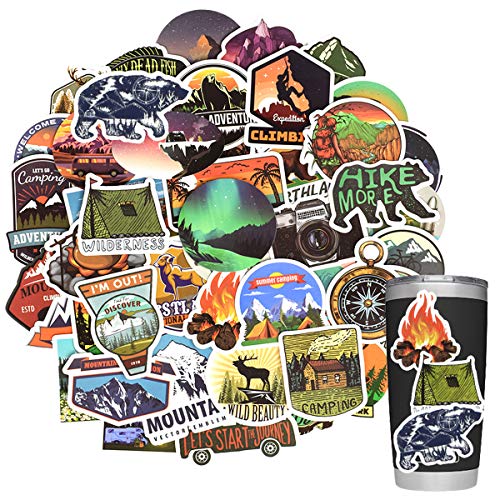
Stickers for Water Bottles Outdoor, Nature Stickers Camping Stickers Adventure Stickers for Yeti Stickers for Cooler Stickers and Decals Waterproof Vinyl Stickers for Teens Boys Kids,Girls 50Pcs
As an Amazon Associate we earn from qualifying purchases. Product prices and availability are accurate as of the date/time indicated.

4Gal Insulated Drink Cooler, Portable Beverage Cooler with Spout – Orange | 48H Cold 12H Hot | 220Lbs Seating Capacity | Lightweight Sports Cooler| Includes Ice Sheet | For Outdoor Camping Party Picnic


As an Amazon Associate we earn from qualifying purchases. Product prices and availability are accurate as of the date/time indicated.

KidzAdventure 2 in 1 Kids Tent for Camping/Kids Play Tent| Backpacking Tent for Kids |Easy Set UP |Blue Adventure Theme Camping Tent
As an Amazon Associate we earn from qualifying purchases. Product prices and availability are accurate as of the date/time indicated.
Prices shown are approximate and for reference only. Prices change often, so please check the current price on Amazon before you buy.
Capacities and features summarize manufacturers’ published information for current models; ice retention claims vary widely by test method and are best compared within a maker’s own line. Bear resistance applies only to models certified for it and only when used with the locks or bolts the maker and local rules direct. Ratings are editorial, weighing child usability, food safety performance, portability, and value at typical prices.
The Six Best Coolers for Kids’ Mountain Camping Reviewed
1. Igloo Playmate Elite 16 Quart: The Child’s Own Cooler
The Playmate is the cooler of American childhood for sound mechanical reasons: a push-button release a small thumb can work, a lid that swings open without a pinch point at the hinge, and a size that holds a child’s day, sandwiches, juice boxes, fruit, and the found treasures that will be evicted at the first inspection. Give a child their own cooler and two things happen, both good: the main cooler is opened a tenth as often, and the child becomes the proprietor of the snack supply, with opinions about ice that would shame a quartermaster. Its insulation is a day’s worth, not a weekend’s, which is exactly its office. As the second cooler in the family system, it may be the most valuable product in this table per dollar.
2. Stanley Adventure Easy Carry 16 Quart: Best Small Family Cooler
Stanley’s 16-quart is the grown-up answer at the same size: a gasketed, leak-resistant build that keeps a weekend’s breakfast and the first day’s dinner honestly cold, latches an adult finds secure and an older child can still operate, and a lid rated in its line to serve as a seat, which at a crowded picnic table is a chair the campsite forgot to provide. For a family whose mountain camping is a night or two from the car, this plus the Playmate is a complete system, and its price leaves the budget for the bear canister or locker fees the mountains may require.
3. YETI Roadie 24: Best Premium Compact
The Roadie 24 earns its premium in the family context on three grounds: a tall shape that takes wine and two-liter bottles upright for the adults and milk for the children without decanting, insulation that stretches a two-day ice load into three, and construction that can be a seat, a step, and a cooler across a decade of children. Its T-latches are the adult-operated kind this guide described, so in the family system it is the main cooler, opened by plan. Used with locks as directed, it meets bear-resistant standards in its line, which, combined with the local storage rules, makes it the most mountain-complete compact cooler here.
4. Coleman 316 Series 52 Quart Wheeled: Best for Walk-In Sites
Mountain campgrounds love a walk-in site and hate a heavy cooler, and wheels are the treaty between them. Coleman’s 52-quart wheeled model carries a long weekend for a family over gravel and grass without a two-adult lift, its lid’s cup holders entertain children at the table, and its price is the table’s friendliest per quart. Its insulation is family-grade rather than expedition-grade, answered by the packing discipline in the buying guide, pre-chilling, block ice, a full box, and its latches are the simple kind small hands learn in one demonstration. For the drive-up and walk-in family circuit, it is the workhorse recommendation.
5. Igloo BMX 25 Quart: Best Rugged Mid-Size
The BMX line is Igloo’s answer to the rotomolded premium class at a working price: heavy-duty construction, a cooler that tolerates the truck bed, the trailhead, and being the camp’s spare seat, with latches that strike the family balance, secure against critters and a rough road, operable by an older child. At 25 quarts it is the one-cooler solution for a small family’s overnight or a larger family’s day at the lake above the valley. It lacks the wheeled Coleman’s site mobility and the YETI’s ice endurance, and in exchange it will likely outlast both in the back of the family vehicle, which is a form of value mountain families understand.
6. RTIC 45 QT: Best Basecamp for Long Stays
When the mountain trip is a week at one site, the RTIC 45 is the basecamp refrigerator: rotomolded insulation that holds ice across days of disciplined openings, a freezer-style gasket, and a capacity that takes a family’s perishables with the ice they require rather than instead of it. It is heavy empty and serious work loaded, a two-adult carry that belongs at drive-up sites and in bear lockers and vehicles as the rules direct, and used locked as directed it carries bear-resistant credentials in its class. For the family that camps long in one mountain place each summer, it replaces a decade of lesser coolers, which is the only arithmetic by which its price is small.
Buying Guide: How to Choose and Pack the Best Cooler for Kids’ Mountain Camping
Step One: Build the Two-Cooler System
Divide the family’s cold life in two before you buy anything. The main cooler holds meals and ingredients, is packed by adults, opened by plan two or three times a day, and is sized by the trip: 16 quarts for an overnight for a small family, 25 to 45 for a weekend, 52 wheeled where the site is walk-in. The snack cooler, the Playmate class, holds the children’s day, is opened forty times without consequence, and travels to the trailhead, the lake, and the scenic overlook while the main cooler stays closed in the shade. This single organizational decision improves food safety, ice life, and parental temper more than any insulation technology in the table, and it costs one small cooler.
Step Two: Pack for the Mountain, in Order
Pre-chill the cooler with sacrificial ice or cold packs the night before, because a warm cooler spends its first ice cooling itself. Freeze everything that tolerates it, milk, juice boxes, meats in their marinades, the chili for night two, and use block ice or large frozen bottles for endurance, with cubed ice filling the gaps, in a ratio that favors blocks as the trip lengthens. Pack in reverse order of use, tonight’s dinner on top, day three’s at the bottom in the coldest zone, raw meats sealed and lowest of all, below and separate from ready foods, with the thermometer visible at the lid. Fill every remaining space, with drinks, with bread, with a towel, because air is the enemy you packed by accident. At the site, keep the cooler in full shade, off hot ground where you can, and covered with a light blanket or reflective cover in fierce sun, and the ice you bought will outlast the flatland version of the same trip.
Step Three: Run the Camp Rules With the Children as Officers
On arrival, read the campground’s food storage rules at the board or the host’s site and set the cooler’s night home accordingly, locker, vehicle, or certified and locked, never the tent, and brief the children as the rule’s owners rather than its subjects: food and scented things live in the cooler or the locker, snacks return to the box, nothing edible sleeps with us. Establish the cooler-opening economy kindly, drinks and snacks from the small cooler at will, the big cooler by expedition, and a handwashing or wipe routine before eating, because mountain water and cooler handles carry the day’s adventures in microbial form. At departure, the cooler is washed, dried open, and stored unlatched, so its gasket rests and its interior does not ripen in the garage. A family that runs these rules owns a system, not a box, and the system is what the next mountain trip inherits.
Frequently Asked Questions About Coolers for Kids’ Mountain Camping
What size cooler does a family need for a weekend in the mountains?
For two adults and two children on a two-night trip, a main cooler in the 25 to 45 quart range, packed by this guide’s method with food frozen and space filled, plus a small 16-quart snack cooler for the children, covers the weekend with ice to spare in most mountain weather. Smaller families and overnight trips are well served by a single 16 to 25 quart cooler. Larger families, longer stays, and trips where the cooler also carries all drinks should step to the 45 to 52 quart class, preferably wheeled if the site is walk-in. The commonest sizing error is buying for volume and forgetting ice: a cooler must hold its food and an equal generosity of ice, so the usable food space is roughly half to two-thirds of the headline capacity on a multi-day trip, and the family that plans by that fraction never plays refrigerator Tetris at midnight by headlamp.
How long will ice last in the mountains?
Longer than a pessimist fears and shorter than a box claims, because ice life is a behavior before it is a specification. In a quality cooler, pre-chilled, packed full with block ice and frozen food, kept shaded and opened by plan, expect two to four days of safe cold in typical mountain conditions, with premium rotomolded models stretching beyond that and budget models landing at the shorter end. Mountain sun is intense enough to punish a cooler left on a sunny tailgate, mountain nights cold enough to reward one left in the shade, and children’s snack traffic is the largest single variable, which is why this guide’s two-cooler system, the small cooler absorbing the openings, extends the main cooler’s ice more reliably than any upgrade in insulation. Verify with the thermometer rather than the calendar: at or below 40 degrees, the food is in its safe zone, and when the ice is gone and the temperature climbs, the perishables’ time is measured in the two hours of this guide’s safety rule, not in hope.
Can we keep the cooler in the tent at night?
No, and this is the one answer in the guide with no exceptions, in any mountains, in any country. A tent is a nylon bag containing sleeping people, and food, with its smells, belongs as far from it as the campground’s rules and geography allow: in the provided bear locker in bear country, in a hard-sided vehicle where that is the local direction, or in a certified bear-resistant cooler, locked as directed, placed away from the sleeping area where regulations permit that method. The rule protects the family first, because an animal investigating food should never find people on the other side of a tent wall, and it protects the animals second, because a bear or raccoon rewarded with food at a campsite becomes a problem animal whose story ends badly. Children understand this rule best in its kind form, which this guide recommends verbatim: our food sleeps in its own safe place, so the wild animals stay wild and we all get to come back next year.
How do I stop my kids from leaving the cooler open?
Give the problem a system rather than a scolding. Put the children’s drinks and snacks in their own small cooler with a lid they can work, and make that cooler genuinely theirs to open, so the forbidden fruit is no longer the only fruit. Keep the main cooler closed by making its openings events, breakfast, lunch, and dinner expeditions that children join as helpers with a job, carrying, fetching, reading the thermometer like a ship’s officer reporting to the captain. Choose latches and lids small hands can close completely, because a lid left ajar is usually a lid a child could not shut rather than would not, and check your own cooler for that design failure before blaming its smallest user. Finally, accept the physics with good humor and pack for it: an extra bag of ice bought at the last town is cheaper than a weekend of vigilance, and a family trip is measured in the children’s memories, which will feature the lake, the stars, and the juice boxes, in that order, and not the ice bill.
Related guides
- Best Cooler for Lake Camping: 6 Best Cooler for Lake Camping Picks in 2026
- Best Camp Kitchen for School Science Field Trips in 2026: 7 Camp Kitchens That Offer Sturdy Prep Space, Easy Setup, and Reliable Performance for School Science Field Trips
- Best Wine Coolers for 50 Bottles in 2026: 6 Wine Coolers With a Capacity of 46 to 52 Bottles, Dual Zone, and a Temperature Range of 40 to 65 Degrees Fahrenheit, for 50 Bottles, Without a Cooler That Is Too Small, or Too Big, for 50 Bottles
- Best Stove for Kayak Camping in 2026: 6 Best Stove for Kayak Camping Picks for Light Weight, Fast Boils, and Reliable Kayak Use
More from Amazon
Programs that pair well with the guide above. Offers and eligibility are set by Amazon and may change.
Free shipping on eligible items, Prime Video and more. Eligible new members can start with a free trial.
Start a Prime free trialA Prime membership for ages 18-24 with a trial period. Eligibility is set by Amazon.
See Prime for Young AdultsAudiobooks and podcasts to listen to on the go. Eligible new members can start with a free trial.
Try Audible freeAd-free music streaming. Eligible new subscribers can start with a free trial.
Try Music Unlimited freeAs an Amazon Associate we earn from qualifying purchases.

Write Your Review
No reviews yet. Be the first to share your experience!