
What's inside
As an Amazon Associate I earn from qualifying purchases. This post may contain affiliate links at no extra cost to you.
Hammock vs tent for summer camping is the season’s defining shelter argument, and summer is the one season where the hammock’s case is genuinely formidable: the heat that turns a tent into a stored-air oven at dusk is the hammock’s home weather, its sleeper suspended in the night’s own airflow with no ground conducting the day’s warmth upward and no walls holding the breath of the parish. The tent answers with the arguments that have made it the default for a century: a room of one’s own, sealed against the storm and the congregation of insects, indifferent to trees, private, and shared. This guide judges the argument on summer’s own evidence, heat management, bug pressure at its annual summit, the thunderstorm that arrives at 2AM in July, ground and site conditions from the forest to the beach, and the sleeper’s body across a whole trip, comparing real, currently sold hammock systems and tents as the two parishes’ champions. Its verdict is not a crown but a map, because the honest answer is that summer contains both shelters’ finest hours, sometimes on the same trip, and the camper who understands which nights belong to which system sleeps better in both.
State each parish’s summer physics plainly. The hammock’s genius is exposure to moving air: the sleeper’s underside, which a tent’s pad insulates into a warm seam all night, breathes in the hammock, and in the hot, still, humid night that defines summer’s hard core, that single fact is worth degrees. Its corresponding law is the cold butt syndrome waiting in ambush, since the same airflow that blesses July steals heat in September and even on the mountain summer night, so the hammock’s summer kit includes the under-insulation decision, a light underquilt or pad, held in reserve against the 3AM surprise. The tent’s summer physics are a battle against its own walls: the fly that sheds the storm also holds the heat, the mesh inner that the modern designs have become is the tent’s surrender to the hammock’s doctrine, ventilation as a design religion, and the camper’s site craft, shade, orientation to the evening breeze, the fly’s doors rolled like sleeves, decides whether the tent sleeps like a screen porch or a sauna. Bugs grade both without sentiment: the summer insect pressure at a lake or in a forest is the year’s maximum, and each system’s netting, the hammock’s integrated net, the tent’s mesh room, is not an accessory in July but the entire difference between sleep and siege. The table that follows is graded on these summer facts, with the all-season virtues taxed at their summer rates.
Our Top Picks
Hammock vs Tent for Summer Camping: Heat, Bugs, and the 2AM Thunderstorm
Heat: The Hammock’s Home Fixture
Score the hot night honestly, because it is the season’s most common night and the hammock wins it. Suspended in air, the hammock sleeper loses heat to every breeze the night offers, needs no pad’s insulation beneath them in true summer, and can rig the tarp high and wide as a shade roof rather than a shelter, admitting the whole evening. The tent’s countermeasures are real but laborious: the mesh-bodied modern tent in a shaded, breezy site approaches the hammock’s comfort and never quite files the same report from the still, low, humid hollow where summer camps so often are. Add the afternoon, when both shelters rest between sessions: the hammock is a chair, a lounger, and a bed in one hang, occupied all day, while the tent in the sun is an oven no one enters until dark, a whole dimension of camp life the comparison must count. The tent’s heat victories are the shoulder hours of the season’s edges, the cool June night in the mountains where the hammock’s airflow becomes its liability and the underquilt comes out, which is why the verdict of this guide is a calendar as much as a contest, the deep summer to the hammock, the edges contested, the high country always audited night by night.
Bugs and Storms: The Tent’s Strongest Suit, Played Carefully
The tent’s fortress is the sealed room, and in the summer’s twin emergencies it matters. Against the insects, both systems field full netting at their serious tiers, and the difference is one of lifestyle: the tent’s room lets the camper sit up, dress, read, and wait out the dusk’s worst hour inside the wire, while the hammock’s net is a bed’s enclosure, entered with a zipper’s discipline and shared with whatever rode in on the sleeve. Against the thunderstorm, the tent is a house: a rated floor, a fly whose seams were sealed in a factory, a structure that has been wind-tunnel argued for decades, and the camper dry inside it with their gear in the vestibule. The hammock’s storm answer is the tarp, and in skilled hands, pitched low and long with its doors’ ends closed by the hang’s geometry, it sheds a summer storm honorably, with two honest taxes: the site must offer the trees at the right span in the right ground, and the storm’s wind-driven rain audits the pitch’s every shortcut. Score the tent ahead in both emergencies, the hammock adequate in both with skill, and let the camper whose summers are the buggy, stormy Southeast weigh that paragraph as the guide’s own scales do.
Ground, Sites, and the Body’s Vote
The third court is the campsite itself. The tent needs a flat, drainable patch of earth and is otherwise the world’s citizen: the beach, the desert, the alpine meadow above the treeline, the festival field, all take a tent, while the hammock’s citizenship is the forest’s, two sound trees at span being a constitution no stand fully amends for the backcountry. Summer’s ground adds its own evidence: the season’s earth is warm, dry, and forgiving, which flatters the tent, while the wet year and the rocky forest floor flatter the hammock, whose sleeper never negotiates with either. The body files the last vote and it is personal in the literal sense: the hammock’s diagonal cradle relieves the pressure points that the ground concentrates, and a generation of side sleepers and sore backs testify for it, while the tent’s flat parish serves the stomach sleeper, the tosser, the couple, and the reader-in-bed with a democracy the hammock cannot match. Neither vote is wrong, and the buying guide’s rehearsal, a borrowed weekend in each, is the only honest electorate, since a shelter is a thing a body chooses and a spreadsheet merely funds.
Hammock vs Tent for Summer Camping: Quick Comparison
| Shelter Model | Key Specs | Best For | Typical Price Range | Rating |
|---|---|---|---|---|
| Warbonnet Blackbird XLC (hammock system) | Integrated net in class, structural ridgeline positioning, tarp paired separately | Best hammock for hot summer nights | $195 – $260 hammock only | 4.8 / 5 |
| MSR Hubba Hubba (tent) | Mesh-body 2P in class, strong ventilation positioning, freestanding | Best tent for summer ventilation | $400 – $530 by size | 4.7 / 5 |
| Hennessy Hammock Expedition class (hammock system) | Net and rainfly included in class, complete system positioning | Best complete hammock kit | $170 – $230 | 4.6 / 5 |
| Big Agnes Copper Spur HV UL (tent) | Ultralight mesh in class, generous headroom positioning, freestanding | Best lightweight summer tent | $450 – $600 by size | 4.6 / 5 |
| REI Half Dome SL (tent) | Mesh-heavy in class, value pricing positioning, roomy interior | Best value summer tent | $250 – $330 by size | 4.5 / 5 |
| Kammok Mantis (hammock system) | Net and fly all-in-one in class, fast pitch positioning, recycled fabrics | Best easy hammock system | $240 – $300 | 4.5 / 5 |
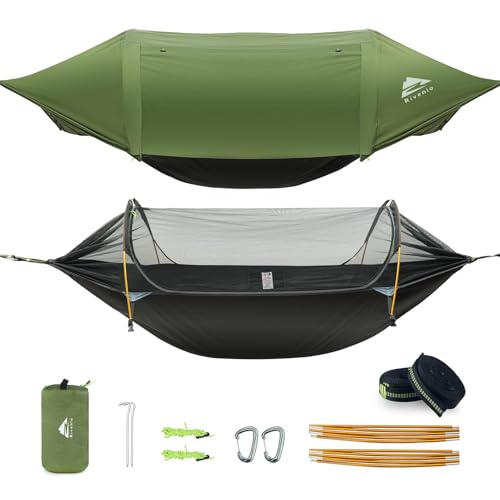
Rivenlo Camping Hammock Tent with Mosquito Net & RainFly, 3 in 1 Waterproof Portable Sleeping Hammock Bug Backpacker Lightweight Outdoor Gear Swing for Hiking Travel Patio Expedition(Dark Green)
As an Amazon Associate we earn from qualifying purchases. Product prices and availability are accurate as of the date/time indicated.

Lawson Hammock Blue Ridge Camping Hammock and Tent (Rainfly and Bug Net Included)
As an Amazon Associate we earn from qualifying purchases. Product prices and availability are accurate as of the date/time indicated.

Haven Tent XL Lay-Flat Hammock Tent (Digital Camo) – Spacious Camping Hammock Tent for 1 Person – Includes XL Insulated Pad, Mosquito Net & Rainfly
As an Amazon Associate we earn from qualifying purchases. Product prices and availability are accurate as of the date/time indicated.
Prices shown are approximate and for reference only. Prices change often, so please check the current price on Amazon before you buy.
Weights, capacities, and what’s included vary by exact model and package; hammock systems may need a tarp and insulation added, as the text notes. Prices are typical US street ranges. Ratings are editorial for summer camping, weighing hot-night comfort, bug and storm protection, site flexibility, and value.
The Six Summer Shelters Reviewed
1. Warbonnet Blackbird XLC: The Hammock’s Champion
The Blackbird represents the hammock parish at its summer strongest: a netted, ridgelined bed whose airflow on the still July night is the category’s whole argument, with the shelf and footbox that organize the sleeper’s small world. Its tarp and under-insulation are separate purchases, honestly counted. For the forest camper in the heat, it is the recommendation defended first.
2. MSR Hubba Hubba: The Tent’s Champion
The Hubba line’s mesh body and ventilation discipline make it the tent that fights summer on the hammock’s own terms, freestanding on any ground the season offers and sealed against its insects. Its price is the premium parish’s. For the camper whose summers include beaches and balds where no tree reports for duty, it is the tent of record.
3. Hennessy Expedition: The Complete Hammock Kit
Hennessy’s system arrives whole, net and fly in the bag, the hammock parish’s easiest first summer, with a storm record across decades of forests. Its entry style asks a rehearsal. As the one-purchase answer to the whole comparison, it is the hammock for the camper who wants the argument settled by Friday.
4. Big Agnes Copper Spur: The Lightweight Tent
The Copper Spur carries the tent’s fortress at a hammock’s weight class, mesh everywhere the summer wants it and headroom that makes the sealed room a pleasure rather than a sentence. Its fabrics ask the care that ultralight always asks. For the backpacking pair in the buggy season, it is the tent that travels like the alternative.
5. REI Half Dome SL: The Value Tent
The Half Dome brings the mesh-room summer tent to the household budget, roomy, honest, and sold with a retailer’s forgiveness behind it. Its weight is the value parish’s tax. For the family and the car camper, it is the tent against which the hammock must argue, and the argument is closer than the price suggests.
6. Kammok Mantis: The Easy Hammock
The Mantis packages the hammock’s summer with the tent’s convenience, net and fly integrated, a pitch measured in minutes, and fabrics that forgive the car camp’s manners. Its weight exiles it from the long trail. For the drive-to forest and the hammock-curious, it is the parish’s open door.
Buying Guide: How to Decide Between a Hammock and a Tent for Summer
Step One: Audit Your Summer’s Map and Its Nights
Write the season’s actual itinerary before the shelters argue: the proportion of forest sites with trees at span against the beaches, fields, and balds that refuse the hammock outright; the nights’ honest temperatures, lowland July against the mountain June that audits the hammock’s insulation; the insect pressure of your waters and woods; and the party’s composition, since the couple, the dog, and the child each vote in this election with standing. Let the map elect the primary shelter, and let the honest camper admit the mixed verdict where it files one, the tent as the household’s foundation with the hammock as its forest instrument being the settlement most mixed-map families reach, at a combined cost the single-shelter purist should envy less than they expect.
Step Two: Buy the Whole System, Not the Headline
Price each parish complete before comparing, since the headlines lie by omission in both directions: the hammock’s true ticket adds the tarp, the net if it is not integrated, the summer under-insulation held in reserve, and the suspension; the tent’s adds the footprint where the floor’s life argues for it, the stakes the soil demands, and the repair kit. Confirm the bug netting as integral in either, since a summer system bought without it is a story the camper tells in the past tense by the second night. Weigh the packed systems against each other and against the trip’s carry, vehicle or back, and let the complete ledger, dollars and ounces both, cast the deciding vote the headline prices tried to steal.
Step Three: Rehearse Both Sleeps Before the Season
Borrow, rent, or backyard both systems for a night each before the money commits, because the body’s vote in this comparison is data and it is only collected horizontally: the hammock hung by its doctrine, thirty degrees and diagonal, slept in through a whole night rather than a nap’s honeymoon; the tent pitched in the yard’s worst corner and slept in with its fly on and its doors as the night demands. Note the morning’s evidence in the trip book, the back, the temperature, the siege of insects at dusk, the 3AM opinion, and buy the system whose morning report you would sign again. Then keep the loser’s friendship, since the season is long and the map is mixed, and the camper with both shelters in the closet and the knowledge of their parishes in the notebook sleeps, all summer, like the argument was never really about the gear at all, which at 2AM in a thunderstorm in July, it finally is not.
Frequently Asked Questions About Hammocks vs Tents in Summer
Is a hammock really cooler than a tent in summer?
On the still, hot, humid night that is summer’s signature, yes, measurably in the only currency that matters, the sleeper’s comfort: the hammock’s suspended body exchanges air on every surface, the underside included, where the tent sleeper’s underside rests on a pad that insulates them from the ground’s coolness and traps their own warmth in the seam. Add the site’s realities and the margin grows, the hammock rigged under its high tarp in the shade’s parish against the tent whose fly has stored the afternoon. The tent closes the gap with its modern weapons, the full-mesh inner, the shaded breezy site, the doors rolled open to the night, and in moving air the two systems approach each other honestly. The hammock’s caveat rides along: its advantage is the summer’s, and the same airflow on the cool mountain night becomes the cold butt syndrome that sends the unprepared to their underquilt, which is why this guide’s verdict is a calendar and not a coronation.
Which is better when the bugs are really bad?
The tent, by the lifestyle margin the text describes: both serious systems field complete netting, and a well-zipped hammock net is as absolute as a tent’s mesh while the camper is in bed, but the tent’s room extends the wire’s protection across the evening’s whole life, dressing, reading, cooking’s edge, and the dusk hour spent upright rather than sealed in a sleeping position. The hammock camper’s countermeasures are discipline and timing: the net zipped before the first scout, the entry made a single practiced motion, the evening’s sitting done in the screen’s parish of clothing and repellent, which in the worst parishes, the northern lake at dusk, the mangrove coast, is a genuine tax on the trip’s pleasures. Score the tent ahead where insect pressure is the trip’s defining fact, call it even in the ordinary summer forest, and let the camper whose map is the buggy shore buy the room, since a shelter is a thing you live in at the worst hour, not a thing you merely sleep in at the best.
Can a hammock handle a summer thunderstorm?
A well-pitched hammock under a proper tarp can, and the parish’s veterans sleep through July’s artillery with a dryness that surprises the tent loyalists, but the sentence’s conditions are the content: the tarp sized generously and pitched low and taut with its ends closed against the wind’s chosen direction, the hammock’s drip lines set so the suspension’s rivers are diverted before they reach the bed, the site chosen on ground that will not become the storm’s streambed, and the trees audited for the dead limbs that a storm audits more harshly. The tent asks less skill for the same dryness, its factory-sealed fortress being precisely the product of a century of 2AM failures, and the beginner’s first storm is more forgivingly spent in it. Judge by your own hands: the camper who will rehearse the tarp in the yard’s rain owns a storm-worthy hammock; the one who will not should let the tent carry the season’s weather and the hammock carry its calms.
Which is better for backpacking in summer?
By the packed ledger, it is closer than either parish’s pamphlets admit: a serious hammock system, bed, net, tarp, suspension, and summer under-insulation, lands in the same weight and bulk parish as a modern lightweight tent, each with configurations that shave or spend ounces by the owner’s priorities. The deciders are the map and the party: the forest trail with trees at every camp belongs to the hammock, which also never wants a flat patch of ground in a country of roots and slopes; the route that climbs above the treeline, crosses the beach, or sleeps two people and a dog in one shelter belongs to the tent, whose freestanding pitch is geography’s universal key. Solo forest backpackers have been migrating hammockward for a decade for the sleep quality’s sake; pairs and the mixed-map walkers stay tented for the room and the range. The scale will not choose for you, which is this guide’s final honesty on the subject: in summer, at equal weight, choose by where you will stop and how you will sleep, and the trail will ratify the choice nightly.
Related guides
- Best Battery Powered Camping Lights: 6 Best Battery Powered Camping Lights Picks in 2026
- Best Kayak Camping Near Boston: 6 Best Kayak Camping Near Boston Picks in 2026
- Best Battery Packs for Backpacking in 2026: 6 Battery Packs for Backpacking With a Capacity, a Wattage, and a Price Range, for Backpacking
- Best Adhesive Sealant for Pellet Stove Door Gasket in 2026: How to Pick a Best Adhesive Sealant for Pellet Stove Door Gasket That Is Heat-Proof, Strong, and Perfect for Your Stove
More from Amazon
Programs that pair well with the guide above. Offers and eligibility are set by Amazon and may change.
Free shipping on eligible items, Prime Video and more. Eligible new members can start with a free trial.
Start a Prime free trialA Prime membership for ages 18-24 with a trial period. Eligibility is set by Amazon.
See Prime for Young AdultsAudiobooks and podcasts to listen to on the go. Eligible new members can start with a free trial.
Try Audible freeAd-free music streaming. Eligible new subscribers can start with a free trial.
Try Music Unlimited freeAs an Amazon Associate we earn from qualifying purchases.


Write Your Review
No reviews yet. Be the first to share your experience!