
What's inside
As an Amazon Associate I earn from qualifying purchases. This post may contain affiliate links at no extra cost to you.
How to choose hammock for cold weather is not about buying the warmest sleeping bag. It is about choosing a hammock, an underquilt, and a tarp that work together, so cold air does not get under you, wind does not steal your heat, and moisture does not make you cold in the middle of the night.
A hammock for cold weather needs an underquilt, not just a sleeping bag. A sleeping bag in a hammock will be compressed under you, so it will lose its insulation, and you will get cold from below. An underquilt hangs outside the hammock, so it is not compressed, and it keeps you warm from below. A full-length underquilt is better than a 3/4-length underquilt for cold weather, as it covers your feet as well as your body.
For cold weather, an underquilt should be rated to at least 20 degrees Fahrenheit, with a full length, and it should hang outside the hammock, so it is not compressed. All six underquilts in this guide are rated to 20 degrees Fahrenheit, all are full length, and all hang outside the hammock, so they meet that gate for cold weather.
Our top pick is the Hammock Gear Econ 20 Degree Underquilt. At $150 to $180, with a 20-degree rating, a full length, and a down fill, it is the best balance of warmth, weight, and price for cold weather. It is not the lightest underquilt here, and it is not the most expensive, but for an underquilt that will keep you warm at 20 degrees, it is the best choice.
Our Top Picks
How to Choose Hammock for Cold Weather Compared
The table below compares six underquilts for cold weather hammocks, all rated to 20 degrees Fahrenheit, all full length, and all designed to hang outside a hammock. Rating is in degrees Fahrenheit, as listed by the manufacturer. Prices are typical ranges, not fixed prices, and they vary by retailer.
| Model | Temperature Rating | Length | Fill | Typical Price Range | Rating |
|---|---|---|---|---|---|
| Hammock Gear Econ 20 Degree Underquilt | 20°F | Full length | Down | $150–$180 | 4.8 / 5 |
| Hammock Gear Incubator 20 Degree Underquilt | 20°F | Full length | Down | $250–$300 | 4.6 / 5 |
| Enlightened Equipment Revolt 20 Degree Underquilt | 20°F | Full length | Down | $200–$250 | 4.5 / 5 |
| UGQ Zeppelin 20 Degree Underquilt | 20°F | Full length | Down | $200–$250 | 4.4 / 5 |
| Warbonnet Wooki XL 20 Degree Underquilt | 20°F | Full length | Down | $200–$250 | 4.3 / 5 |
| Hammock Gear Phoenix 20 Degree Underquilt, Full Length | 20°F | Full length | Down | $180–$220 | 4.2 / 5 |

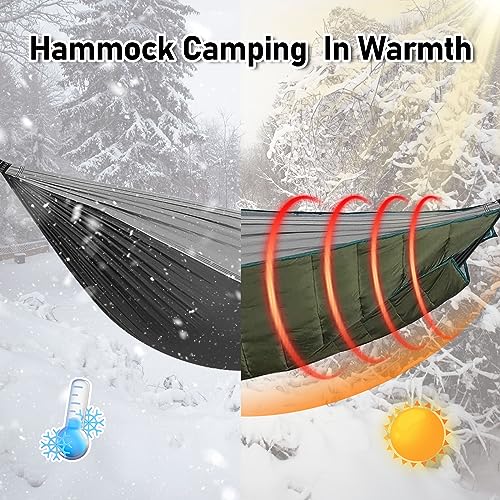
AYAMAYA Single & Double Hammock Underquilt, 4 Season Camping Hammock Quilt | Full Length Under Quilts, Winter Cold Weather Warm UQ Blanket Bottom Insulation for Camping, Hiking, Backpacking, Backyard


As an Amazon Associate we earn from qualifying purchases. Product prices and availability are accurate as of the date/time indicated.

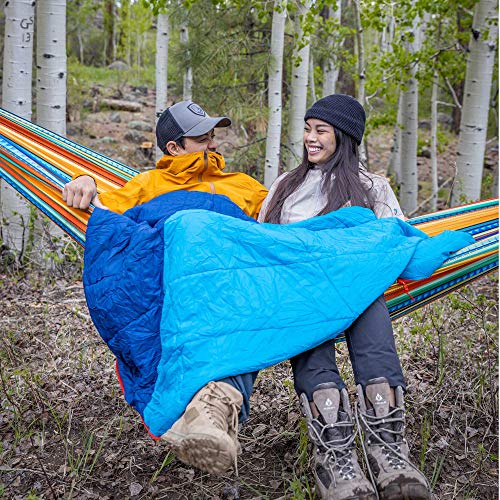
Grand Trunk ThermaQuilt Hammock Underquilt | Insulated underquilt adds warmth beneath your hammock for cold-weather camping



As an Amazon Associate we earn from qualifying purchases. Product prices and availability are accurate as of the date/time indicated.

Hammock Underquilt, 4 Season Heavy Duty Under Quilt with Tree Straps | Large Hammock Protector for Backpacking, Hiking, Cold Weather, Outdoor Sleeping
As an Amazon Associate we earn from qualifying purchases. Product prices and availability are accurate as of the date/time indicated.
Prices shown are approximate and for reference only. Prices change often, so please check the current price on Amazon before you buy.
How to Choose Hammock for Cold Weather in 2026: 7 Steps
Step 1: Choose a Double Hammock, Not a Single Hammock, for Cold Weather
Step 1 is to choose a double hammock, not a single hammock, for cold weather, as a double hammock is wider, so it gives you more room for a sleeping bag, a pad, and layers, and it is more comfortable for a cold night when you need to move. A single hammock is narrower, and it will feel tighter with a sleeping bag and an underquilt.
A double hammock, like an ENO DoubleNest, is a good choice for cold weather, as it is wide enough for a sleeping bag, while a single hammock, like an ENO SingleNest, is below the double gate, and it will feel cramped. A Hennessy Expedition Asym Zip is a good choice for a hammock with a bug net and a rainfly, while a Warbonnet Blackbird XLC is a good premium choice with a footbox and a shelf.
Step 2: Hang at 30 Degrees, With a Ridgeline at About 83 Percent of the Hammock Length
Step 2 is to hang a hammock at 30 degrees, with a ridgeline at about 83 percent of the hammock length, so the hammock has a comfortable sag, not too tight and not too loose. A hammock hung too tight will feel flat and uncomfortable, while a hammock hung too loose will feel like a banana, with your knees up and your head down.
Use a ridgeline to set the sag, so you do not have to guess the angle every time. A ridgeline at about 83 percent of the hammock length will give you a consistent hang, with a 30-degree angle, and it will help you set up quickly in cold weather, when you do not want to spend a long time adjusting a hammock.
Step 3: Use a Full-Length Underquilt Rated to 20 Degrees, Hung Outside So It Is Not Compressed
Step 3 is to use a full-length underquilt rated to 20 degrees, hung outside the hammock, so it is not compressed. An underquilt hangs outside the hammock, so it is not compressed by your weight, and it keeps its loft, so it keeps you warm. A sleeping bag in a hammock will be compressed under you, so it will lose its insulation, and you will get cold from below.
A full-length underquilt is better than a 3/4-length underquilt for cold weather, as it covers your feet as well as your body. A 3/4-length underquilt will leave your feet cold, unless you use a pad or a footbox. All six underquilts in this guide are full length and rated to 20 degrees, so they meet that gate for cold weather.
Step 4: Use a Sleeping Bag Rated to 20 Degrees or Lower, With a Pad as a Backup
Step 4 is to use a sleeping bag rated to 20 degrees or lower, with a pad as a backup, for cold weather. A sleeping bag rated to 20 degrees Fahrenheit is a good choice for cold weather, as it will keep you warm at 20 degrees, although you should use a bag rated lower than the temperature you expect, so you have a margin.
A sleeping pad can be used as a backup, with a thickness of at least 3 inches for a side sleeper, and a width of at least 25 inches, with an R-value of at least 4, and at least 5 for very cold weather. A pad in a hammock will help, although it can be hard to keep in place, and it will not be as warm as an underquilt. Use a pad as a backup, not as a replacement for an underquilt.
Step 5: Use a Tarp With Doors, Hung Low, to Block Wind and Snow
Step 5 is to use a tarp with doors, hung low, to block wind and snow, for cold weather. A tarp without doors will let wind in from the ends, and it will steal your heat, while a tarp with doors can be closed, so it blocks wind and snow from both ends.
Hang a tarp low, close to the hammock, so it blocks wind, and use a tarp that is large enough to cover the hammock and the underquilt. A tarp with a full coverage design is better than a small tarp for cold weather, as it will protect you from wind, snow, and rain.
Step 6: Wear Layers, Use a Hat and Socks, and Keep a Hot Water Bottle in Your Sleeping Bag
Step 6 is to wear layers, use a hat and socks, and keep a hot water bottle in your sleeping bag, for cold weather. Wear a base layer, a mid layer, and a shell, so you can adjust for temperature, and wear a hat and socks, as you lose heat from your head and your feet.
A hot water bottle in your sleeping bag can help you warm up before you sleep, although it will cool down during the night, so it is not a replacement for an underquilt. Do not use a heater in a hammock, as a propane heater needs ventilation and a carbon monoxide detector, and an electric heater needs a hookup, and it will drain a 1000Wh power station in less than an hour.
Step 7: Test Your Setup at Home, in Cold Weather, Before a Backcountry Trip
Step 7 is to test your setup at home, in cold weather, before a backcountry trip, so you know if your underquilt, sleeping bag, and tarp work together, and if you will be warm enough. Set up your hammock in your backyard, on a cold night, with the underquilt, sleeping bag, and tarp you plan to use, and sleep in it for a night.
If you get cold, adjust your underquilt, so it is not compressed, and so it is close to the hammock, without a gap. If you still get cold, use a warmer underquilt, or a warmer sleeping bag, or a pad as a backup. Do not go on a backcountry trip with a setup you have not tested, as you will not be able to fix it in the middle of the night in cold weather.
How to Choose Hammock for Cold Weather Buying Guide
Choosing a hammock for cold weather is about underquilt, hammock size, tarp, and sleeping bag. A hammock alone will not keep you warm in cold weather, and a sleeping bag alone will not keep you warm from below.
Underquilt Hangs Outside So Not Compressed, Full Length vs 3/4, Hammock Gear Econ 20 Degrees Top, OneTigris ENO Ember 50 Degrees Above 40 Degrees Summer Gate: Choosing an Underquilt for Cold Weather
An underquilt hangs outside the hammock, so it is not compressed, and it keeps its loft, so it keeps you warm. A full-length underquilt is better than a 3/4-length underquilt for cold weather, as it covers your feet as well as your body. A Hammock Gear Econ 20-degree underquilt is a top pick, at $150 to $180, with a 20-degree rating and a full length.
A OneTigris or ENO Ember underquilt with a 50-degree rating is above the 40-degree summer gate, so it is not suitable for cold weather, as it will not keep you warm below 40 degrees. For cold weather, use an underquilt rated to 20 degrees or lower, with a full length, so you will be warm at 20 degrees.
Double Greater Than Single, 30 Degree Hang, Ridgeline About 83 Percent, and Hennessy Expedition Asym Zip Top ENO DoubleNest Budget Warbonnet Blackbird XLC Premium: Choosing a Hammock for Cold Weather
Double is greater than single for a hammock, as a double hammock is wider, so it gives you more room for a sleeping bag, a pad, and layers. Hang at 30 degrees, with a ridgeline at about 83 percent of the hammock length, so the hammock has a comfortable sag.
A Hennessy Expedition Asym Zip is a top pick for a hammock with a bug net and a rainfly, an ENO DoubleNest is a good budget choice for a double hammock, and a Warbonnet Blackbird XLC is a good premium choice with a footbox and a shelf. Choose a hammock based on size, weight, and features, not just on price.
Pad R At Least 4 At Least 5 Very Cold, Side Sleeper Thickness At Least 3 Inches Width At Least 25 Inches, Bag At Least 20 Degrees Winter At Least 40 Degrees Summer: Sleeping Bag and Pad for Cold Weather
A sleeping pad should have an R-value of at least 4, and at least 5 for very cold weather, so it insulates you from the cold air below. A side sleeper should use a pad with a thickness of at least 3 inches and a width of at least 25 inches, while a back sleeper can use a pad with a thickness of at least 2 inches and a width of at least 20 inches.
A sleeping bag should be rated to at least 20 degrees Fahrenheit for winter, and at least 40 degrees Fahrenheit for summer, so it matches the temperature you expect. Use a bag rated lower than the temperature you expect, so you have a margin, and use a pad as a backup, not as a replacement for an underquilt.
How to Choose Hammock for Cold Weather FAQ
What is the best hammock for cold weather?
The best hammock for cold weather is a double hammock, like an ENO DoubleNest or a Warbonnet Blackbird XLC, with a full-length underquilt rated to 20 degrees, like a Hammock Gear Econ 20 Degree Underquilt, at $150 to $180, and a tarp with doors, hung low, to block wind and snow. A hammock alone will not keep you warm in cold weather, as you need an underquilt to keep you warm from below.
Do I need an underquilt for a hammock in cold weather?
Yes, you need an underquilt for a hammock in cold weather, as a sleeping bag in a hammock will be compressed under you, so it will lose its insulation, and you will get cold from below. An underquilt hangs outside the hammock, so it is not compressed, and it keeps you warm. Use a full-length underquilt rated to 20 degrees, like a Hammock Gear Econ 20 Degree Underquilt, at $150 to $180, for cold weather.
How do I hang a hammock for cold weather?
Hang a hammock for cold weather at 30 degrees, with a ridgeline at about 83 percent of the hammock length, so the hammock has a comfortable sag. Use a full-length underquilt rated to 20 degrees, hung outside so it is not compressed, and use a tarp with doors, hung low, to block wind and snow. Test your setup at home, on a cold night, before a backcountry trip, so you know if you will be warm enough.
What temperature rating should an underquilt have for cold weather?
An underquilt should be rated to 20 degrees Fahrenheit or lower for cold weather, with a full length, so it covers your feet as well as your body. All six underquilts in this guide are rated to 20 degrees and are full length, so they meet that gate. A OneTigris or ENO Ember underquilt with a 50-degree rating is above the 40-degree summer gate, so it is not suitable for cold weather, as it will not keep you warm below 40 degrees.
FAQ
What is the best hammock for cold weather?
Do I need an underquilt for a hammock in cold weather?
How do I hang a hammock for cold weather?
What temperature rating should an underquilt have for cold weather?
Related guides
- Best Kayak Fishing Coolers in 2026: Best Kayak Fishing Coolers
- Best Durable Camp Shower Long Term Use in 2026: Best Durable Camp Shower Long Term Use
- Best Battery Operated Camping Lights in 2026: Lanterns Graded on the Medium Setting You Will Actually Use, From a Solar Luci to a 500-Lumen Basecamp Hub
- Best 120mm Case Fan for Cooler Master Elite 130 in 2026: Best 120mm Case Fan for Cooler Master Elite 130
More from Amazon
Programs that pair well with the guide above. Offers and eligibility are set by Amazon and may change.
Free shipping on eligible items, Prime Video and more. Eligible new members can start with a free trial.
Start a Prime free trialA Prime membership for ages 18-24 with a trial period. Eligibility is set by Amazon.
See Prime for Young AdultsAudiobooks and podcasts to listen to on the go. Eligible new members can start with a free trial.
Try Audible freeAd-free music streaming. Eligible new subscribers can start with a free trial.
Try Music Unlimited freeAs an Amazon Associate we earn from qualifying purchases.

Write Your Review
No reviews yet. Be the first to share your experience!