
What's inside
As an Amazon Associate I earn from qualifying purchases. This post may contain affiliate links at no extra cost to you.
The best kayak fishing coolers solve a geometry problem before they solve a temperature problem. A kayak’s tankwell, the open storage recess behind the seat where a cooler must live, is smaller, narrower, and more oddly shaped than any cooler aisle assumes, and a cooler that fits a truck bed beautifully can be a useless, top-heavy monument on a kayak, raising the center of gravity, catching the wind, and sliding at the first lean. Add the kayak fisherman’s specific demands, a cooler that opens one-handed from a seated twist, that ties down to pad eyes and survives a capsize without donating its contents to the lake, that keeps a morning’s catch cold and legal and separate from the sandwiches, in summer heat radiating off plastic an arm’s length from the water, and the category narrows fast. This guide compares six real, currently sold coolers that genuinely work on fishing kayaks, from the dry-box cooler that has become the kayak standard to the soft cooler that straps behind a seat where no hard box fits, and it teaches the measuring, mounting, and ice discipline that matter more, on the water, than any cooler’s advertised retention days.
Decide the cooler’s job before its size, because kayak fishing quietly needs two cold jobs done and they should not share a box without a plan. Job one is the angler: drinks, lunch, and bait, opened often, all day, by a seated person twisting around. Job two is the catch: fish that must be kept cold for quality and, in many places, kept whole and identifiable for regulations until they reach the dock. A single mid-size cooler with a divider or with the catch bagged separately inside can serve both on a small-water day. A serious harvest day wants the catch in its own fish bag or second cooler, because opening the fish box for every drink warms the catch, and because fish and food sharing meltwater is a food-safety compromise no ice retention figure justifies. The table grades each cooler for the job it does best, and the buying guide helps you compose the pair your fishing actually requires.
Our Top Picks
Best Kayak Fishing Coolers: Fit, Access, and Ice on the Water
Measure the Tankwell, Then Read Dimensions Like a Contract
Take three measurements of your kayak before reading a single cooler listing: the tankwell’s length and width at its narrowest, because wells taper, and the depth from the well’s floor to the point where a cooler would rise above the deck line and start catching wind and branches. Then read cooler dimensions the same suspicious way, at the base as well as the lid, because coolers taper too and a cooler that fits at its top can wedge at its bottom, and check the height against your seat back, since the cooler you cannot reach past is the cooler you will stop opening, which means warm drinks by noon whatever its insulation. Weight is the third dimension and the one brochures whisper: a rotomolded cooler that holds ice for five days also weighs, empty, what a soft cooler weighs full, and on a kayak every pound rides high and aft, where it trims the boat stern-down and makes a small kayak feel smaller. For most fishing kayaks the honest classes are these: a compact hard or dry-box cooler in the 13-to-22-quart class for the well, or a soft cooler shaped for the space behind or beneath the seat. Everything larger belongs to the boat you may buy someday, not the kayak you paddle now.
Ice Retention on a Kayak Is a Day, and That Is Enough
Cooler marketing competes in days of ice retention measured in closed boxes in mild rooms, and a kayak cooler lives open in the sun on hot plastic, accessed thirty times a day, which is a different sport entirely. What a kayak angler needs is a full fishing day, ice at dawn, cold drinks and a cold catch at the ramp in the evening, in summer, and every serious cooler in this table delivers that day when it is packed with the discipline the buying guide teaches: pre-chilled, filled completely, ice above and below the contents, and opened with intent rather than browsed. The premium rotomolded premium buys margin, the second day for the weekend trip, the brutal August afternoon, the long drive home with the catch, and that margin is worth paying for exactly when your fishing includes those things. Judge retention as insurance, not as identity, and spend the difference, if your days are single and mild, on the rod holder or the paddle that your fishing will feel more.
Tie-Downs, Access, and the Capsize Test
A kayak cooler earns its place in the moment the kayak goes over, because that moment is a when and not an if across a fishing lifetime. The cooler must be strapped, through its handles or tie-down slots, to the tankwell’s pad eyes or gear tracks, with straps that a wet hand can release and re-secure, and its lid must latch or zip against water pressure rather than resting shut, because a cooler that pops open in a flip feeds the lake and floats away from a swimmer who has other priorities. Access is the daily side of the same design: a lid that opens from the seated twist, one-handed, without the cooler needing to be lifted or unstrapped, and a shape stable enough not to tip when its lid is leaned on during that twist. Test both in the driveway as this guide’s buying section directs, strapped into the actual kayak, sat in by the actual angler, because the cooler that passes in the garage is the only kind that passes on the water.
Best Kayak Fishing Coolers: Quick Comparison
| Kayak Fishing Cooler Model | Key Specs | Best For | Typical Price Range | Rating |
|---|---|---|---|---|
| Engel UC19 Dry Box / Cooler | 19-quart class, airtight dry-box seal, shoulder strap and tie-down points in this line class, doubles as dry storage | Best kayak fishing cooler overall | $85 – $110 | 4.6 / 5 |
| YETI Hopper Flip 12 | Soft cooler, leakproof zipper in this line class, wide-mouth flip top, straps and tie-down points, fits tight spaces | Best soft cooler behind the seat | $200 – $250 | 4.5 / 5 |
| YETI Roadie 24 | Rotomolded hard cooler, 24-quart class, tall slim footprint in this line class, strap slots, strong ice retention | Best hard cooler for big tankwells | $200 – $250 | 4.5 / 5 |
| Pelican 20QT Elite Cooler | Rotomolded class hard cooler, 20-quart, press-and-pull latches in this line class, tie-down slots, lifetime guarantee class | Best latching hard cooler | $150 – $200 | 4.4 / 5 |
| RTIC 22 QT Ultra-Light Cooler | Hard cooler, 22-quart class, lighter construction than rotomolded rivals in this line class, rope handles and tie-downs | Best lightweight hard cooler | $100 – $140 | 4.3 / 5 |
| Seattle Sports Kayak Catch Cooler | Soft tapered fish cooler designed for kayak decks and wells, insulated, hose-clean interior in this line class | Best dedicated catch cooler | $60 – $90 | 4.2 / 5 |
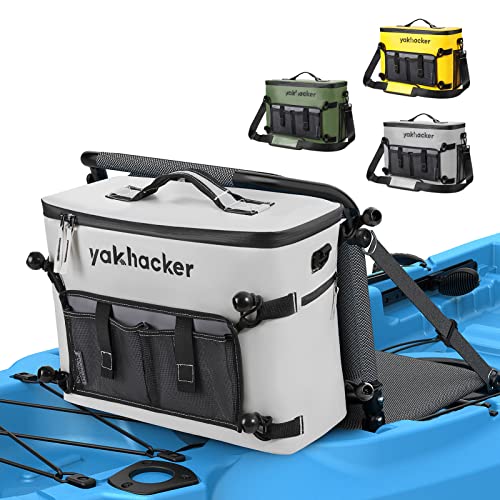
Yakhacker Kayak Cooler, Waterproof Seat Back Cooler with Lawn-Chair Style Seats, Kayak Accessories Bag, Portable Ice Chest Cooler for Kayaking, Travel, Lunch, Beaches &Trips (Silver)
As an Amazon Associate we earn from qualifying purchases. Product prices and availability are accurate as of the date/time indicated.

Buffalo Gear Kayak Fish Cooler Bag, 25in Portable Kayak Cooler for Caught Fish,Leak Proof Kayak Fishing Kill Bags with Shoulder Strap


As an Amazon Associate we earn from qualifying purchases. Product prices and availability are accurate as of the date/time indicated.

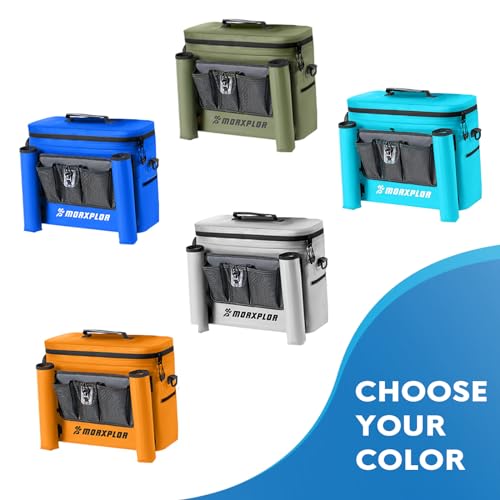
MORXPLOR Kayak Cooler,Waterproof Kayak Seat Back Cooler for Kayaking,Kayak Accessories with 2 Fishing Rod Holders


As an Amazon Associate we earn from qualifying purchases. Product prices and availability are accurate as of the date/time indicated.
Prices shown are approximate and for reference only. Prices change often, so please check the current price on Amazon before you buy.
Capacities and features summarize manufacturers’ published information for current versions; kayak fit depends on your tankwell’s measurements, as this guide explains. Ratings are editorial, weighing kayak fit, access, sealing, weight, retention for a fishing day, and value.
The Six Kayak Fishing Coolers Reviewed
1. Engel UC19: Best Kayak Fishing Cooler Overall
The Engel dry box cooler became the kayak standard by being shaped like the problem: a compact, upright 19-quart box with an airtight gasket seal that keeps water out in a flip and keeps ice honest in the sun, tie-down friendly corners, a shoulder strap for the carry to the launch, and a second life, out of fishing season, as the dry box every paddler needs anyway. Its insulation is a day-class rather than a rotomolded week-class, and that is the correct trade for its weight and price, which leave the kayak trimmed properly and the budget alive. As the angler’s cooler, drinks, lunch, bait, within a seated twist of the rod hand, it is the most kayak-literate object in this table, and the aftermarket of trays and dividers built for it by the kayak community is a review written by thousands of launches.
2. YETI Hopper Flip 12: Best Soft Cooler Behind the Seat
The Hopper Flip answers the kayaks where no hard box fits, the narrow wells and the sit-insides, with a soft body that conforms to the space, a leakproof zipper that holds in a capsize, and a flip top that opens wide to a seated angler who cannot afford a fishing expedition inside his own cooler. Its insulation delivers the fishing day in full, its shell sheds hooks and wipes clean of the day’s evidence, and its straps web it to whatever the kayak offers. It costs what YETI charges for that engineering, and its defense is the familiar one: it will outlast several kayaks. For the small-boat angler it is not the luxury option. It is the one that fits, which on a kayak is the first luxury there is.
3. YETI Roadie 24: Best Hard Cooler for Big Tankwells
The modern fishing kayak, wide, stable, built like a dock, has a tankwell that takes a real rotomolded cooler, and the Roadie 24’s tall, slim footprint was practically drawn for it, riding behind the seat of the big boats with its strap slots taking the tie-downs and its retention covering the weekend the smaller boxes cannot. Its weight is the entry fee and this guide states it without flinching: on a big pedal kayak it is ballast you planned for; on a small paddle kayak it is a stern anchor and a mistake. Measure, as instructed, and where the boat is big enough, this is the cooler that ends cooler shopping for a decade of launches.
4. Pelican 20QT Elite: Best Latching Hard Cooler
Pelican’s cooler brings its case-making discipline to the tankwell: press-and-pull latches that a cold, wet, fish-slimed hand can work and that stay shut in the flip this guide plans for, tie-down slots that keep the straps off the lid’s operation, and a guarantee in the lifetime class from a company whose whole name is keeping water away from valuables. Its 20-quart size sits in the kayak sweet spot for the larger wells, its retention is the rotomolded class’s, and its ergonomics, molded handles and a shape that carries two-handed without drama, respect the launch ramp’s reality. It earns its place as the hard cooler for the angler who has watched a lesser latch fail, once, at the worst moment, and filed the lesson permanently.
5. RTIC 22 QT Ultra-Light: Best Lightweight Hard Cooler
RTIC’s Ultra-Light attacks the rotomolded class’s kayak problem, weight, with a construction that sheds a meaningful share of it while keeping a hard cooler’s shape, tie-downs, and multi-day ambitions in a 22-quart box a smaller kayak can carry without sulking. Its retention gives a little to the heaviest rivals and takes back more in trim and in the carry from the car, which is a trade kayak anglers, who portage their whole world on every trip, are right to make. For the mid-size kayak that found the Roadie class too much boat-anchor and the Engel class too little ice, it is the engineered middle, and its price undercuts the premium names it competes with on the water rather than in the brochure.
6. Seattle Sports Kayak Catch Cooler: Best Dedicated Catch Cooler
The Catch Cooler is the second-box answer this guide’s introduction promised: a tapered, insulated soft cooler shaped to lie on a kayak’s deck or in its well, built to receive fish rather than sandwiches, with an interior that hoses clean at the ramp and a profile that does not fight the paddle. Iced properly it keeps a catch in proper condition through a day’s fishing and the drive home, and it keeps the food cooler food-only, which is a food-safety architecture as much as a convenience. It is not a drinks cooler’s equal in retention and does not pretend to be. Paired with any row above it, it completes the two-job system, and a kayak so equipped fishes like a much larger boat.
Buying Guide: How to Choose the Best Kayak Fishing Cooler
Step One: Measure, Weigh, and Assign the Job
Measure the tankwell at its narrowest, note the height to the deck line, and write down your kayak’s capacity margin, what the boat can still carry high and aft after you and your tackle. Assign the cooler its job in writing, angler, catch, or both with a divider and bagged separation, and let the job and the measurements shortlist the table together: the Engel class for the standard well and the single-box day, the soft coolers for the tight boats and the catch, the rotomolded class only where the boat and the weekend honestly call for them. Order with the retailer’s return terms read, because the final fit test is physical and a reputable seller expects it, and a cooler that fails your tankwell by a quarter inch is not a bargain at any discount.
Step Two: The Driveway Capsize and Twist Test
Strap the finalist into the kayak as it will fish, loaded with the day’s weight in water bottles and ice, then perform the two tests that predict its life. Sit in the kayak, rod in hand in imagination, and twist for a drink twenty times: the lid, the latch, the cooler’s stability, and your back will file their report without mercy. Then, on grass and with help, lean the loaded kayak to its capsize point and past it, and see what the straps and the seal actually do, because a cooler that leaves the boat or opens in the yard will do both in the lake on a worse day. Adjust straps, add a leash where prudence suggests, and solve in the driveway what the water charges more to teach. This rehearsal, twenty minutes, is the difference between a kayak cooler and a cooler that has been on a kayak.
Step Three: Pack Ice Like You Mean It
Pre-chill the cooler the night before with sacrificial ice or frozen bottles, because a warm cooler spends its first ice cooling itself instead of your catch. In the morning, build the load in layers, a floor of ice or frozen bottles, the catch or the food, ice filled into every void and over the top, because cold air falls and the last inch above the contents is where retention is won, and freeze your drinks themselves where their nature allows, so the cargo is its own ice. Keep a small towel over the load inside the lid if your cooler allows, an old angler’s trick that cuts the warm air exchanged at every opening, and open the cooler with a list, not a browse. Land the catch onto fresh ice promptly, bleed and clean fish by your local practice and regulations, and at the ramp, drain meltwater only when more ice is not the plan, because that cold water, while it lasts, is still refrigeration. Packed this way, every cooler in this table fishes a full summer day. Packed carelessly, none of them does, and that sentence is the most useful one in this article.
Frequently Asked Questions About Kayak Fishing Coolers
What size cooler is best for kayak fishing?
For most fishing kayaks, the 12-to-24-quart band is the whole answer, chosen by the tankwell’s tape measure rather than by appetite: compact wells and sit-inside boats take the 12-quart soft class or the 19-quart dry-box class, and the big modern fishing kayaks take the 20-to-24-quart hard class behind their seats. Resist the upward temptation, because an oversized cooler on a kayak is not extra capacity, it is a raised center of gravity, a wind sail, a stern trimmed down, and a reach you cannot make from the seat, four penalties paid on every trip for volume used on few. The angler who regularly needs more cold space than 24 quarts on a kayak has usually discovered, honestly, a second cooler for the catch, as this guide’s pairing doctrine suggests, or a boat, which is a fine discovery and a different article.
Can I keep my catch and my food in the same cooler?
You can, with separation and discipline, and for anything beyond a small, short day you should not, and the reasons are practical rather than precious. Fish meltwater carries the lake and the fish’s own biology, and food that shares it, even bagged, rides at a risk and with an aroma that no one ordered; the catch also deserves better refrigeration than a box opened for every drink can give it, and in many jurisdictions the catch must stay whole and identifiable until landing, which a crowded lunch box complicates. The field solution is cheap: the catch goes into its own fish bag or catch cooler with its own ice, the food cooler stays clean and cold, and the two meet again at the cleaning table. Where a single box must serve, bag the catch sealed and iced at the bottom, food sealed above the ice line, and shorten the day the arrangement is asked to cover.
How do I stop my cooler from sliding or tipping in the tankwell?
By strapping it as cargo rather than setting it as luggage. Run cam straps or quality bungees, cam straps hold better under load, from the cooler’s handles or tie-down slots to the tankwell’s pad eyes or gear tracks, crossed where the geometry allows, snug enough that the loaded cooler cannot shift when the kayak is lifted by its bow and shaken, the yard test that predicts the water. Add a non-slip mat or a section of foam under the cooler where the well is slick, both to grip and to quiet the hull drumming that spooks the shallows. Check the rig after the first hour on the water, because straps settle and knots learn, and re-snug at the lunch stop as a habit. A cooler secured this way is part of the boat in a capsize, which is where you want it: floating with you, sealed, findable, and still cold when the day resumes.
Is a soft cooler or a hard cooler better for a kayak?
Each wins the boat it fits. The soft cooler wins the small and narrow kayak, conforming to wells no box can enter, riding behind seats and under decks, lighter on the carry and on the trim, with modern leakproof zippers that hold their own in a flip, at some cost in retention and in the crush protection a hard shell gives. The hard cooler wins the big fishing kayak, where its weight is planned ballast, its retention covers the weekend, its lid is a seat and a cutting board’s neighbor, and its tie-down slots were drawn for exactly your straps. The error is not choosing either; it is choosing by the cooler aisle’s logic, capacity and retention days, instead of by the kayak’s logic, fit, weight, access, and sealing, in that order. Measure the boat, assign the job, and the material chooses itself, as most good gear decisions do once the questions are in the right order.
Related guides
- Best Battery Operated Camping Fan in 2026: 6 Battery Fans With a Runtime of at Least 10 Hours on Low, for a Tent, Without a Fan That Dies in the Night, or a Fan That Is Too Small, for a Tent
- How to Choose Camp Kitchen for Seniors Camping in 2026: 7 Steps to Choose a Camp Kitchen With a Table of at Least 20 by 40 Inches, a Windscreen, and Storage, for Seniors, Without a Kitchen That Is Too Heavy, or Too Hard to Set Up, for a Senior
- Best Solar Battery Bank for Camping in 2026: 6 Solar Battery Banks With at Least 10,000mAh, a Built-In Solar Panel, and a USB-C Output, for Camping, Without a Bank That Is Too Small, or Too Slow, for a Phone, a Headlamp, and a Lantern
- Best Cooler for Beginners Kids Camping in 2026: Best Cooler for Beginners Kids Camping for Light Carry, Easy Use, and Simple Family Camping
More from Amazon
Programs that pair well with the guide above. Offers and eligibility are set by Amazon and may change.
Free shipping on eligible items, Prime Video and more. Eligible new members can start with a free trial.
Start a Prime free trialA Prime membership for ages 18-24 with a trial period. Eligibility is set by Amazon.
See Prime for Young AdultsAudiobooks and podcasts to listen to on the go. Eligible new members can start with a free trial.
Try Audible freeAd-free music streaming. Eligible new subscribers can start with a free trial.
Try Music Unlimited freeAs an Amazon Associate we earn from qualifying purchases.

Write Your Review
No reviews yet. Be the first to share your experience!