
What's inside
As an Amazon Associate I earn from qualifying purchases. This post may contain affiliate links at no extra cost to you.
The best solar battery backpacking setup is not a single product, and any guide that sells it as one is setting up a disappointed hiker. It is a small system with two citizens, a panel that harvests and a battery that stores, and the wisdom of the whole arrangement is that the battery does the work while the panel does the gathering, at the camp, at the lunch stop, across the long evening, rather than in the fantasy of charging meaningfully while walking through a shaded forest with the panel bouncing on a pack. Solar backpacking works, genuinely and well, under its honest conditions: open country, desert, alpine, and shoreline; long days above the treeline or at a basecamp that sits in the sun; and loads sized to the harvest, phones, headlamps, watches, cameras, and satellite messengers, which are the trail’s real electrical parish. It fails, predictably, in the deep green tunnel of an eastern forest in summer, in a week of rain, and against loads it was never sized for, the tablet’s nightly film and the drone’s stable of batteries. This guide compares the real, currently sold panels and power banks that the successful solar backpackers actually carry, graded on watts per ounce, honest harvest, durability, and the battery’s capacity per ounce, with the arithmetic worked in the open so the buyer can size a system to a trip rather than to a hope.
Do the energy budget before the table, since it is the whole discipline in one sum. List the devices and their daily appetites in watt-hours: a phone’s battery is roughly fifteen watt-hours and a careful hiker spends one charge or less a day with the radios disciplined; a headlamp and a watch are small coins; a camera is a variable appetite set by its owner’s trigger finger; the satellite messenger sips. The total, commonly twenty to forty watt-hours a day for a connected modern hiker, is the number the system must replace, and it elects both citizens: the battery, sized to hold two to three days of it as a buffer against the weather, which is to say the ten to twenty thousand milliamp-hour parish at trail voltages, roughly thirty-seven to seventy-four watt-hours; and the panel, whose rated watts must be divided by the field’s honesty factor, since a panel rated at twenty-one watts delivers its nameplate only to a clear noon aimed by a patient hand, and the day’s true harvest is the figure the experienced plan on, commonly a third to a half of the optimistic arithmetic. Size to the honest numbers, carry the buffer, and the system becomes infrastructure; size to the box’s numbers, and it becomes a ritual object carried for luck.
Our Top Picks
 24" Inflatable Solar Camping Lantern IP66 TPU Emergency24in-1PCS6.41 x 5.75 x 1.77 inches0.63 poundsCheck on Amazon
Best Solar Battery Backpacking: Panels, Power Banks, and Honest Harvests
The Panel: Watts per Ounce and the Aiming Discipline
The backpacking panel parish divides into the folders and the flexibles, and both are graded first on the only specification that cannot be spun: watts of rating per ounce of carry. The modern folding parish, monocrystalline cells behind a fabric or polymer skin with kickstands or grommets for the aiming, has climbed to a standard where a panel in the one-pound parish honestly rates in the high teens to twenties of watts, which is the threshold at which solar backpacking stops being a hobby and becomes a supply line. The flexible and pack-mounted mini parish trades harvest for invisibility, a few watts that will not run a phone’s day but will keep a watch and a messenger immortal, and it should be bought for that office and no other. Durability is the second specification, since the panel lives outside the pack in the weather’s parish: the junction box’s sealing, the fabric’s stitching, the cells’ tolerance for the flexing that a folding life guarantees, and a warranty from a maker who answers. The aiming discipline is the third and it is free: the panel squared to the sun and re-aimed at the stops, the basecamp panel following the day like a sunflower with a housekeeper, harvests half again what the forgotten panel on the shaded side of the tent collects, which is why the experienced treat solar as a camp chore with a yield rather than as an appliance.
The Battery: The System’s Actual Heart
The power bank is where the system’s intelligence lives, and its specifications divide the serious from the souvenir. Capacity is read in watt-hours where the maker states them, and in milliamp-hours divided by the trail’s experience where they do not, with the parish’s working sizes, ten thousand for the minimalist’s weekend, twenty thousand for the week’s autonomy, and the weight per capacity as the figure of merit the ounces are spent on. Pass-through and input speed are the solar parish’s own virtues: a bank that accepts a charge as fast as a small panel can offer it, and whose input does not sulk at the panel’s variable, cloud-crossed output, since the panel’s power arrives in pulses that some banks reject in a rhythm that wastes the day, a compatibility the buyer verifies from the makers’ own pages and the parish’s long experience rather than discovering at the second camp. Output is the third specification, the modern fast-charge parish for the phone that must drink quickly at the lunch stop, and ports enough for the evening’s queue, phone, lamp, and watch in their rotation. The battery is also the system’s bad-weather answer, charged from the wall before the trip, so the first days owe the sky nothing, a doctrine this guide will repeat in the buying steps because it is the difference between a solar system and a solar hope.
When Solar Loses: The Honest Alternatives
The guide that will not name its subject’s defeats is an advertisement, so here they are. For the trip of three days or fewer, the battery alone wins on weight and certainty, since a twenty-thousand bank carried from the wall outperforms any panel’s three-day harvest at a fraction of the system’s ounces. For the deep forest and the high-latitude winter, the panel’s harvest thins to a gesture, and the parish’s answers are the bigger battery, the sterner radio discipline, and the resupply cache rather than a bigger panel carried in denial. For the truly heavy parish, the expedition’s cameras and communications, solar graduates to the basecamp scale, the larger folding arrays of the car and the sled, which are beyond this table’s backpacking parish and should be shopped as infrastructure. What remains, and it is a great deal, is the long trail in open country, the desert crossing, the alpine week, the basecamp summer, where the best solar battery backpacking system earns its ounces every single day and the hiker’s parish stays lit, connected, and photographed on sunlight and arithmetic.
Best Solar Battery Backpacking: Quick Comparison
| Solar Backpacking Product | Key Specs | Best For | Typical Price Range | Rating |
|---|---|---|---|---|
| Goal Zero Nomad 20 / 50 class panels | Folding panel in class, 20W parish positioning, kickstand and chaining in line | Best solar battery backpacking panel overall | $100 – $250 by size | 4.6 / 5 |
| BigBlue 28W folding panel class | 28W rated in class, multiple USB outputs positioning, friendly pricing | Best harvest per dollar | $60 – $90 | 4.4 / 5 |
| Anker 622 / 321 power bank parish | 10,000mAh class in line, fast charge positioning, maker support | Best minimalist battery | $30 – $55 by model | 4.6 / 5 |
| Nitecore NB10000 / NB20000 | Carbon-frame bank in class, lightest per capacity positioning, trail-proven | Best battery per ounce | $60 – $120 by capacity | 4.7 / 5 |
| Goal Zero Venture 75 / Sherpa parish | Rugged bank in class, weatherproof positioning, panel-matched in line | Best rugged battery | $90 – $180 by model | 4.4 / 5 |
| BioLite SolarPanel 10+ / Charge parish | Panel with integrated battery in class, sundial aiming aid positioning | Best integrated simplicity | $120 – $150 | 4.3 / 5 |

Solar Charger Power Bank 20000mAh, Portable Wireless Charger for iphone | 15W Fast Charging Battery Pack Built in 3 Cables, Dual SOS Flashlights for Camping Hiking, Emergency Solar Panel, Flight-Safe


As an Amazon Associate we earn from qualifying purchases. Product prices and availability are accurate as of the date/time indicated.
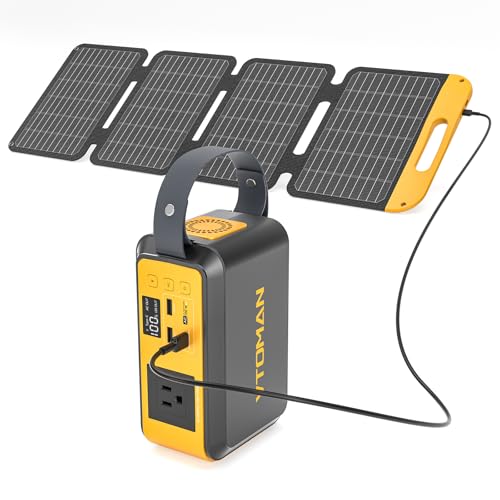
VTOMAN Jump 100 Portable Power Station with 40W Foldable Solar Panel | 89.6Wh LiFePO4 Battery 100W AC Solar Generator Kit for Outdoor Camping, Hiking, Cycling, Backpacking, Road Trips
As an Amazon Associate we earn from qualifying purchases. Product prices and availability are accurate as of the date/time indicated.
24" Inflatable Solar Camping Lantern IP66 TPU Emergency Hiking Light(Green) | 4000mAh Battery | Magnetic Hanging LED Tube | USB-C Rechargeable & Phone Charger for Outages, Backpacking & Survival Kits


As an Amazon Associate we earn from qualifying purchases. Product prices and availability are accurate as of the date/time indicated.
Prices shown are approximate and for reference only. Prices change often, so please check the current price on Amazon before you buy.
Ratings and capacities refer to the makers’ published specifications; field harvest varies with sun, angle, and conditions as described in the text. Prices are typical US street ranges. Ratings are editorial for backpacking, weighing watts and capacity per ounce, durability, charging compatibility, and value.
The Six Solar Backpacking Products Reviewed
1. Nitecore NB Series: Best Battery per Ounce
Nitecore’s carbon-frame banks lead the battery parish on the figure of merit itself, the most watt-hours per ounce in the serious field, with the trail’s own abuse record behind them. Their finish is the minimalist’s, no armor wasted. For the system in this guide, one of them is the recommendation defended first.
2. Goal Zero Nomad: Best Panel
The Nomad parish is the folding panel’s reference, honest ratings, kickstands that make the aiming discipline easy, and chaining for the basecamp’s growth. Its price per watt is the premium parish’s. Where the harvest is the mission, it is the standing answer.
3. Anker Bank Parish: Best Minimalist Battery
Anker’s banks bring the phone world’s polish and support to the ten-thousand parish, the weekend’s and the disciplined week’s citizen. Their trail armor is the pocket’s rather than the expedition’s. As the default bank, they have earned the default’s crown.
4. BigBlue 28W Class: Best Harvest per Dollar
BigBlue’s folders deliver the rated watts of panels twice their price, with outputs for the whole evening queue, behind a warranty of the value parish’s brevity. Their bulk folded is the tier’s confession. On arithmetic alone, they embarrass the field.
5. Goal Zero Venture Parish: Best Rugged Battery
The Venture banks armor the battery for the pack’s exterior life, weather-sealed and drop-proofed, matched to their maker’s panels as a system. Their weight per capacity is the armor’s tax. Where the kit lives hard, they are the bank that survives it.
6. BioLite SolarPanel 10+: Best Integrated
BioLite’s panel carries its own small battery and a sundial that teaches the aiming discipline at a glance, the beginner’s whole system in one object. Its scale is the modest parish’s, graded as such. As the first solar purchase, it is the gentlest teacher in the table.
Buying Guide: How to Build a Solar Backpacking System
Step One: Budget the Watt-Hours Before the Products
List the devices, their batteries’ sizes where the makers state them, and your honest daily use with the radios disciplined, airplane parish and scheduled checks rather than the always-on of the city, and total the day’s watt-hours in the open. Let that sum elect the battery at two to three days of it, and the panel at a rating whose honest field fraction, a third to a half of the nameplate across a day’s aiming, covers the daily sum in your country’s sun. Strike any product whose maker will not state its capacity or its rating in real units, since a solar product that hides its numbers is telling you their size in the only way it dares, a sentence this site has now used in two parishes because it is true in both.
Step Two: Buy the Pair as a System and Test It at Home
Order the panel and the bank together, verify their compatibility in the driveway’s full sun before the trail does it for you, the bank accepting the panel’s pulsing parish without its rhythm of refusals, the cables short and sound, the connectors the modern parish’s common tongue. Run the home audit across a day: the battery drained by the household’s honest use, the panel aimed at its stops, the evening’s figure written in the trip book, since that measured harvest, in your latitude and your hands, is the only rating your planning should ever use again. Pack the system as a system, panel outside or flat against the pack’s back parish, bank in its dry parish with the cables, and rehearse the camp routine, panel out at the pitch, devices in their evening rotation, before the trip’s first tired evening improvises it worse.
Step Three: Walk the Discipline and Let the Log Govern
Start every trip with the battery full from the wall, since the solar system’s first law is that the sky owes you nothing and the buffer is carried, not hoped for. Work the aiming at every stop as a camp chore with a yield, keep the phone’s radios on the trip’s discipline rather than the city’s, and let the buffer’s level, read each evening, govern the next day’s spending like the water supply it resembles. Log the harvests against the weather and the country, desert against forest, June against October, because the second trip’s sizing should be evidence and the third’s will be wisdom. Kept so, the system becomes the trail’s quiet infrastructure, the lamp lit, the messenger green, the camera immortal, on nothing but sunlight and arithmetic, which is the whole promise of the best solar battery backpacking and the reason its honest version, unlike its advertised one, actually works.
Frequently Asked Questions About Solar Backpacking
Can a solar panel charge my phone while I hike?
It can contribute, and it should not be the plan: a panel on a moving pack in a forest’s dapple spends its day at a fraction of its rating, starting and stopping as the shade crosses it, which many phones and banks tolerate poorly and all of them harvest weakly. The working doctrine is the text’s: the battery is charged at the stops and at camp, where the panel can be aimed and left in the sun’s parish, and the phone drinks from the battery in its turn, so each device does the job it is good at. The exception is the open country’s walking, the desert and the alpine ridge where the sun is a ceiling rather than a rumor, where a pack-top panel genuinely gathers as it goes. Plan on the camp harvest, treat the walking harvest as a dividend, and the system’s arithmetic will never embarrass you at the third evening’s dead phone, which is where the fantasy version of solar backpacking files its reports.
What size power bank do I need for a week on the trail?
By the budget of Step One rather than by the shelf’s suggestion: total your honest daily watt-hours, the disciplined phone, the lamp, the watch, the messenger, and multiply by the days of buffer your weather and your solar harvest argue for, commonly two to three, which for the modern connected parish lands in the twenty-thousand milliamp-hour class, roughly seventy-four watt-hours, with the ten-thousand class serving the sterner minimalist and the shorter trip. Read the capacity in watt-hours where the maker states them, since the milliamp figure is quoted at the cell’s voltage and flatters by the conversion. Weigh the answer per ounce among the serious banks, the table’s leader existing precisely because that figure varies by half across the parish. The bank is the system’s heart and its heaviest citizen, so its sizing is the purchase to get right, with the panel, which can be shared, borrowed, or upgraded, as the second decision.
Will solar work in the forest or in cloudy weather?
It will work at a fraction that the planning must respect: under a closed canopy the harvest falls to a tithe of the open country’s, and under a grey sky to a half or less of the clear day’s, with the panel’s monocrystalline parish holding up better in the diffuse light than the older technologies did, a difference of degree and not of kind. The system’s defense is the buffer and the discipline, the battery sized for the grey days in a row that your country’s weather deals, the radios on their strictest parish, the non-essential charging deferred to the sun’s return. The hiker whose whole route is the green tunnel should take the text’s honest counsel and carry the bigger battery in place of the panel for trips under the week, since the ounces buy certainty there rather than hope. Solar is a supply line with a weather parish, and the grown-up version of the technology is the one that plans for the clouds it cannot forbid.
How do I keep solar gear working trip after trip?
Treat the panel as the optic it partly is and the battery as the chemistry it wholly is: the panel’s surface wiped clean of the trail’s film, its folds never creased beyond their design, its cables inspected at the connectors where flexing writes its failures, and the whole stored flat and dry rather than at the bottom of the gear bin’s parish. The battery lives by the lithium parish’s standing laws, which this site repeats across its battery guides: stored at a partial charge for the off-season rather than full or empty, kept from the frozen parish’s charging, since a lithium pack must never be charged below freezing, and cycled enough to stay honest. Test the whole system in the driveway before the season’s first trip, as Step Two prescribes, since the failure discovered at home is a purchase and the one discovered at the third camp is a story. Kept so, a solar system serves for years of trails, its harvest slowly better understood and its ounces never regretted, which is the definition of gear that has earned its place in the pack.
Related guides
- Best Solar Batteries for Camping in 2026: 7 Solar Batteries That Store Sun Power, Run Your Gear, and Keep You Charged Off Grid
- Camp Grill Grate vs Camp Grill Pan Cooking in 2026: Which One Should You Pack for Burgers, Eggs, and Campfire Meals?
- Best Budget Hammock Underquilt Under 100 Dollars in 2026: 6 Warm Underquilts for 40-Degree Nights
- Best Hammock for Hiking Trips in 2026: How to Pick a Best Hammock for Hiking Trips That Is Light, Strong, and Perfect for the Trail
More from Amazon
Programs that pair well with the guide above. Offers and eligibility are set by Amazon and may change.
Free shipping on eligible items, Prime Video and more. Eligible new members can start with a free trial.
Start a Prime free trialA Prime membership for ages 18-24 with a trial period. Eligibility is set by Amazon.
See Prime for Young AdultsAudiobooks and podcasts to listen to on the go. Eligible new members can start with a free trial.
Try Audible freeAd-free music streaming. Eligible new subscribers can start with a free trial.
Try Music Unlimited freeAs an Amazon Associate we earn from qualifying purchases.

Write Your Review
No reviews yet. Be the first to share your experience!