
What's inside
As an Amazon Associate I earn from qualifying purchases. This post may contain affiliate links at no extra cost to you.
How to fix hammock straps that slip begins with naming which slip you own, because the word covers three different failures with three different cures. The first is the slide, the strap migrating down the trunk over the first hour until the hammock’s geometry sags into a banana and the sleeper’s back files the report. The second is the stretch, the suspension lengthening under load, nylon webbing’s known habit, worst in the rain, so the hang that was perfect at dusk is a ground-clearance negotiation by 2AM. The third is the slip proper, the buckle or knot surrendering its grip in a single event, the only one of the three that is dangerous, and the one whose causes, a worn cinch buckle, a badly dressed knot, a daisy-chain loop tearing out, deserve a retirement rather than a repair. This guide teaches the diagnosis first, then the fixes in their order, from the free ones, the hang’s angle and the strap’s placement, through the friction tricks of the experienced, to the replacement systems whose designs have engineered the slip out, comparing the real, currently sold strap systems that campers graduate to when the stock suspension has filed its last report. Its safety frame is the hammock parish’s standing law: never hang higher than you are willing to fall, test every fix with a seated bounce at knee height before the full commit, inspect webbing and hardware before every hang, and retire any strap whose stitching, webbing, or buckle shows damage, because a suspension is a life-support component wearing a casual name.
Understand the physics the fixes answer to. A hammock’s suspension pulls on the tree at an angle, ideally near thirty degrees from horizontal, and the forces at each end run to several times the sleeper’s weight as that angle flattens, which is why the too-tight, guitar-string hang both slips more and breaks more: the flatter the line, the harder it drags the strap down the trunk and the more it asks of every buckle. Friction is the slide’s whole battleground, webbing against bark, and it is lost by smooth trunks, wet bark, narrow straps that concentrate the load into a creep, and straps placed over the trunk’s taper where the geometry itself is a slide’s accomplice. Stretch is a material’s confession, nylon elongating under load and elongating further when wet, polyester holding its length in both, which is why the serious suspension parish is polyester’s and the budget kits’ nylon is the midnight sag’s usual author. And the buckle’s slip is a wear story, the cinch bar’s teeth polished by a thousand adjustments, the webbing’s surface glazed, until the grip that held in June lets go in October. Read your own failure against that physics, in daylight, at knee height, and the cure will be the one the diagnosis elected rather than the one the internet shouted loudest.
Our Top Picks
 Hammock Straps for Trees Heavy Duty Long Extender120 inches by 1 inch120 x 1 x 0 inchesCheck on Amazon
 Bliss Hammocks WM-505_2 Multi-Loop Suspension System w/S Hooks117 x 1.18 x 0.99 inches1.1 poundsCheck on Amazon
How to Fix Hammock Straps That Slip: Diagnose the Slide, the Stretch, and the Surrender
Fix the Hang First: Angle, Height, and Placement
The free fixes come first because they cure the majority of slides. Set the suspension’s angle honestly near thirty degrees, straps high enough on the trunk that the hammock’s lowest point lands at chair height with the sleeper aboard, since the too-low attachment both flattens the angle and invites the strap to walk down to its preferred geometry. Place the strap above a branch stub, a knot, or any irregularity the trunk offers where the site allows it, a natural cleat that ends the slide’s career without a single purchase, and choose the trunk’s straight section over its taper, the flare at the base being a slide dressed as an anchor. Wrap the strap’s full width flat against the bark with no twists, since a twisted strap is a narrow strap in disguise, its load concentrated and its friction halved, and pass the end through its loop so the webbing cinches the trunk as the sleeper’s weight arrives rather than hanging from a single friction face. Then perform the parish’s proof: sit in the hammock at its lowest, bounce deliberately, get out, and read the straps’ positions against the marks your memory made, because a fix that has not been tested at knee height is a hypothesis, and the ground is the laboratory where hypotheses should meet it.
Friction Tricks: Bark, Wraps, and the Backup Knot
When the hang is right and the slide persists, the trunk is the defendant, and its smooth-barked citizens, the beech, the birch, the wet pine of a rainy weekend, are tried by every hammock camper eventually. The first remedy is a second wrap: the strap taken twice around the trunk before its loop, doubling the friction face and halving the load’s leverage on each, at the price of a foot of strap and a minute of honesty. The second is the backup knot, a simple overhand or a slippery hitch tied in the tail behind the buckle or the loop’s cinch, which does not hold the load but arrests its travel, converting a slide into a stopped event with a visible confession, and which the experienced tie as a matter of doctrine on any strap they do not wholly trust. The third is the interface itself, a short length of old inner tube, shelf liner, or the strap maker’s own tree-friendly pads interposed between webbing and bark, raising the friction and protecting the tree in the same act, a courtesy the parish should practice anyway. What the tricks must never become is a substitute for retiring the worn: a buckle that slips under a firm hand’s test in the yard is not a friction problem but a funeral postponed, and the next section’s replacements are priced against the alternative, which is the ground’s opinion delivered at 2AM.
When to Replace: Buckles, Webbing, and the Upgrade Systems
Retirement has its criteria and they are not negotiable: webbing cut, glazed, or frayed at its working points; stitching pulled or sun-rotted at the loops; a cinch buckle whose bar no longer bites a firm pull; a daisy chain with any loop’s stitching strained; and any suspension that has survived a fall event, whose fibers have been shock-loaded past their testimony. The replacement market answers with three design parishes, and the table compares their champions: the daisy-chain strap, loops sewn along a polyester webbing, adjusted by a carabiner’s choice of loop, whose slip is impossible because there is nothing to slip, only loops to tear, which inspection governs; the cinch-buckle system on polyester, infinitely adjustable, whose quality lives entirely in the buckle’s manufacture; and the whoopie sling and soft-shackle parish of the ultralight, an adjustable loop of hollow-braid cord whose bury grip tightens under load, elegant, featherweight, and demanding a competence its owners should rehearse at home. All three ride on tree straps wide enough to protect the bark, an inch at the minimum and wider where the parish’s conscience is awake, because the tree is the anchor, the host, and the next camper’s inheritance in one.
How to Fix Hammock Straps That Slip: Quick Comparison
| Suspension System | Key Specs | Best For | Typical Price Range | Rating |
|---|---|---|---|---|
| ENO Atlas Suspension System | Polyester daisy chain in class, 30 adjustment points positioning, carabiner clips | Best fix for slipping straps overall | $30 – $40 per pair | 4.7 / 5 |
| Kammok Python 10 / 15 class | Polyester daisy chain in class, reflective tracer in line, long lengths in line | Best for big trees and long spans | $35 – $55 by length | 4.6 / 5 |
| DutchWare Beetle Buckle / cinch systems | Titanium or aluminum cinch hardware in class, polyester webbing positioning, cottage quality | Best cinch-buckle upgrade | $35 – $60 by build | 4.7 / 5 |
| Hummingbird Hammocks Single / Double straps | Ultralight webbing in class, button-link design positioning, minimal weight | Best ultralight fix | $30 – $45 per pair | 4.4 / 5 |
| Grand Trunk Tree Straps class | Daisy chain in class, long webbing positioning, friendly pricing | Best value daisy chain | $20 – $30 per pair | 4.4 / 5 |
| Amsteel Whoopie Sling kits (cottage class) | Hollow-braid cord in class, adjustable bury positioning, tree strap paired | Best for gram-counters and tinkerers | $25 – $45 per pair | 4.3 / 5 |
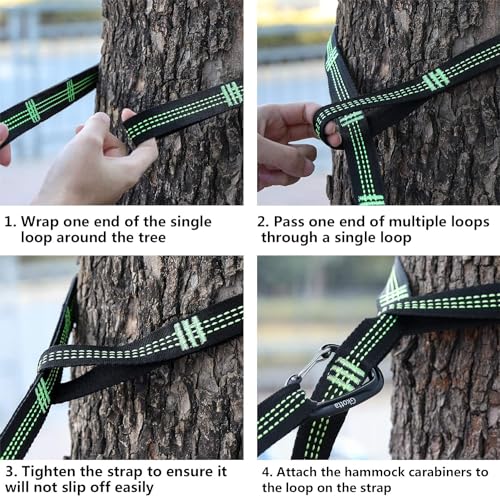
Hammock Straps for Trees Heavy Duty Long Extender Hammock Webbing Ropes Kit | With 2 Carabiners, Set of Two 10FT Long, 32 Adjustable Loops, Holds up to 1000 Lbs Each Strap, Hammock Ties Around Tree Safe




As an Amazon Associate we earn from qualifying purchases. Product prices and availability are accurate as of the date/time indicated.

Travel Bird Ultra-Light Suspension System, 9.8ft Tree Strap for Hammock, Compact & Easy to Set Up, Hammock Accessories for Camping, Hiking, and Backpacking


As an Amazon Associate we earn from qualifying purchases. Product prices and availability are accurate as of the date/time indicated.
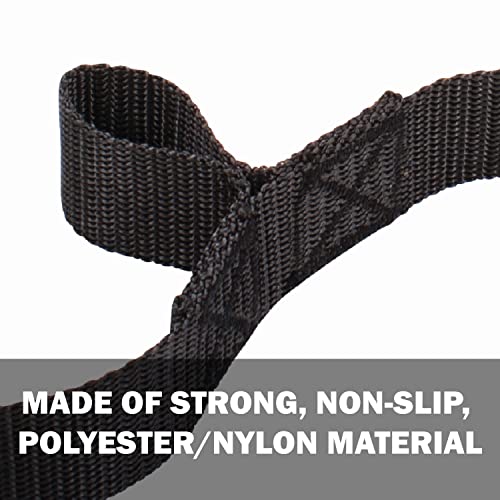
Bliss Hammocks WM-505_2 Multi-Loop Suspension System w/S Hooks, for Hammocks and Hammock Chairs, Adjustable Straps, Non-Slip Polyester & Nylon, 300 Lbs Capacity, Black




As an Amazon Associate we earn from qualifying purchases. Product prices and availability are accurate as of the date/time indicated.
Prices shown are approximate and for reference only. Prices change often, so please check the current price on Amazon before you buy.
Capacities and lengths refer to the makers’ published specifications; always use tree straps of at least one inch width and inspect before every hang. Prices are typical US street ranges. Ratings are editorial for slip resistance, weighing adjustment security, material stability, durability, ease of use, and value.
The Six Replacement Systems Reviewed
1. ENO Atlas: Best Overall Fix
The Atlas leads the replacement table on the slip’s simplest refutation: a polyester daisy chain cannot creep, stretch being polyester’s near-zero and the carabiner’s loop being a positive engagement rather than a friction’s hope. Its thirty adjustments answer the geometry of any two trees in the parish. For the camper whose stock straps have filed their report, it is the recommendation defended first.
2. DutchWare Cinch Systems: Best Buckle Upgrade
DutchWare’s cottage hardware answers the camper who loves the cinch’s infinite adjustment and hates its surrender: buckles machined and finished to a standard the kit straps’ stamped metal cannot file, on polyester webbing. Its menu asks a decision or three. For the tinkerer, it is the parish’s summit and its hobby in one.
3. Kammok Python: Best for Big Trees
The Python’s lengths serve the old-growth parish, spans and trunks that swallow lesser straps whole, in a daisy chain with reflective tracers for the midnight navigation. Its price follows its yardage. Where the trees are giants, it is the standing answer.
4. Grand Trunk Straps: Best Value
Grand Trunk’s daisy chains deliver the positive-engagement cure at the friendliest price in the table, long and honest webbing from a hammock house. Their carabiners are the value tier’s. As the first upgrade from a slipping kit suspension, the arithmetic is the argument.
5. Hummingbird Straps: Best Ultralight
Hummingbird miniaturizes the daisy doctrine into a system that weighs what a granola bar wishes it weighed, its button links positive and its webbing engineered rather than merely narrow. Its spans are the compact parish’s. For the backpacker whose slip happened at altitude, it is the fix that adds nothing to the pack.
6. Whoopie Sling Kits: Best for Tinkerers
The whoopie sling closes the table as the parish’s elegant machine: a bury that grips harder the harder it is pulled, adjusted by a fingertip’s slide, at a weight that makes webbing feel like ballast. Its competence requirement is real and stated in its own section above. In rehearsed hands, it is the connoisseur’s suspension; in unrehearsed ones, it is homework.
Buying Guide: How to Choose a Suspension That Will Not Slip
Step One: Diagnose Your Failure Before Buying Its Cure
Reproduce the failure in the yard at knee height and name it by the article’s taxonomy: the slide, cured by placement, wraps, and friction before any money moves; the stretch, cured only by the material’s change, polyester for nylon, since no knot untwists a fiber’s nature; the surrender, cured by retirement, the system’s replacement purchased against the criteria of the text and never against hope. Write the diagnosis in the trip book, because the strap that slips again next season in a new way will be diagnosed faster by a camper with a record. Only then shop, with the failure’s name at the top of the list, since the market will happily sell the stretch’s victim a better buckle and the surrender’s victim a longer strap, neither of which is the cure that was diagnosed.
Step Two: Specify Polyester, Width, and Positive Engagement
Set the replacement’s floor from the maker’s own page: polyester webbing, stated in words; a width of at least an inch at the tree, for the bark’s sake and the friction’s; an adjustment that engages positively, the daisy chain’s loop or a buckle whose manufacture you can interrogate; and a rated capacity with the parish’s customary margin over the loaded hammock’s forces, remembering the angle’s multiplication from the text. Match the length to your country’s trees, the eastern forest’s modest spans against the western giants, and confirm the hardware’s parish, carabiners rated and gated for the purpose rather than the keychain’s cousins, whose presence in a suspension is a retirement event in itself.
Step Three: Install, Proof, and Inspect Forever
Hang the new system by the doctrine of the first section, angle, placement, flat wraps, and proof it at knee height with the deliberate bounce that is the parish’s signature on every new rig. Tie the backup knot behind any friction device as the doctrine prescribes, set the drip lines while your hands are there, and sleep the first night at the hang’s lowest safe geometry until the system’s record is earned. Thereafter inspect as the law of the introduction commands, webbing, stitching, and hardware read by hand and eye before every hang, the retirement criteria applied without sentimentality, since a suspension’s whole biography should be boring: the same straps, the same trees, the same unbroken sleep, season after season, which is what a fixed slip looks like when it is fixed for good.
Frequently Asked Questions About Slipping Hammock Straps
Why do my hammock straps slide down the tree?
Because the slide is a friction deficit with four usual authors, and the yard diagnosis will name yours: a strap placed on the trunk’s tapered flare or a smooth-barked tree, where the geometry and the surface conspire; a hang angle too flat, whose multiplied forces drag the strap toward the ground it is seeking; a twisted or narrow strap, whose contact face is a fraction of its width; and wet bark, the rainy weekend’s universal solvent of grip. The cures run in the text’s order: raise the attachment and restore the thirty degrees, choose the straight trunk or the place above a branch stub, flatten the full width against the bark, add the second wrap, and interpose a friction interface on the hopeless trunks. A slide that survives the whole list is telling you the strap itself, glazed or worn webbing whose surface has forgotten friction, is the author, and its cure is the replacement table rather than a fifth trick.
Why does my hammock sag lower by morning?
That is the stretch, and its author is almost always nylon: the fiber elongates under sustained load by a percentage that turns a chair-height dusk into a ground-brushing dawn, and it elongates further when wet, which is why the sag’s worst performances are filed on rainy nights. Contributing accomplices are the new strap’s first nights, when any webbing settles its weave, and the trees themselves, whose flex in a wind is a suspension component nobody bought. The cure is the material’s change to polyester, whose stretch is a rounding error by comparison, hung by the same doctrine; the management, for the camper keeping nylon a while longer, is to hang the evening’s geometry a few inches proud, anticipating the settlement, and to re-seat the adjustment at the dusk check rather than the 2AM one. What the sag is not, in a sound system, is a warning of failure: it is a fiber’s personality, announced in advance, and the camper who knows it plans around it like the tide.
Is it safe to tie a knot in a hammock strap?
As a backup, yes, with the roles kept straight: the knot behind the buckle or the loop, tied in the tail as an arrestor, is the experienced camper’s doctrine and harms nothing, since it carries no load unless the primary device travels, in which case it converts a fall into a jolt and a lesson. As the primary suspension, the answer narrows: knots weaken webbing substantially at the bend, they weld themselves under load until the morning’s untying is a knife’s work, and a knot in flat webbing can capsize in ways round cord does not, which is why the parish’s systems are sewn loops and hardware rather than knots. The water knot is the flat webbing’s one respectable citizen where a knot is truly needed, dressed flat and inspected. Let the knot be the seatbelt and never the axle, and let any strap whose primary hold is an improvisation be replaced by the table’s positive engagements at the first opportunity the driveway offers.
When should hammock straps be replaced?
On the criteria of the text, applied without negotiation: any cut, fray, or glazing at the webbing’s working points; any stitching pulled, broken, or sun-rotted at the loops, read by spreading the loop and looking, since the failure hides in the fold; any buckle that fails the firm hand’s test in the yard; any carabiner whose gate has lost its snap; and any component that has survived a fall, whose shock load has spent its testimony whether or not the eye can find the receipt. Age alone argues by exposure rather than by birthday, the garaged strap of five seasons being younger than the truck-bed strap of one. The economics close the argument: a suspension is the cheapest life-support in the outdoor world, its replacement priced in the tens of dollars against the fall it exists to prevent, and the camper who retires a strap a season early has bought the cheapest insurance in the entire gear closet. When in doubt, hang it in the yard, bounce it at knee height, and let the doubt itself cast the deciding vote, since doubt about a suspension is information, and the ground is a critic whose reviews are all final.
Related guides
- Best Camp Kitchen for Festival Camping in 2026: How to Pick a Best Camp Kitchen for Festival Camping That Is Portable, Sturdy, and Perfect for Festival Cooking
- Best Cooler Light for Night Camping in 2026: 6 Lights That Help You See Inside a Cooler After Dark
- Best Camp Kitchen Pot Set Under 100 Dollars in 2026: Stanley, GSI Outdoors, MSR, and Sea to Summit Compared for a Hundred Counted Whole, a Pot Gripper Proven Cold and Full Before It Is Ever Trusted Hot, and Dinners Cooked in the Open Air on Real Camp Stoves
- How to Choose a Camp Kitchen for Beginners in 2026: 7 Steps to a Simple, Affordable Camp Kitchen
More from Amazon
Programs that pair well with the guide above. Offers and eligibility are set by Amazon and may change.
Free shipping on eligible items, Prime Video and more. Eligible new members can start with a free trial.
Start a Prime free trialA Prime membership for ages 18-24 with a trial period. Eligibility is set by Amazon.
See Prime for Young AdultsAudiobooks and podcasts to listen to on the go. Eligible new members can start with a free trial.
Try Audible freeAd-free music streaming. Eligible new subscribers can start with a free trial.
Try Music Unlimited freeAs an Amazon Associate we earn from qualifying purchases.

Write Your Review
No reviews yet. Be the first to share your experience!