
What's inside
- Best Camp Kitchen for Corporate Retreats Outdoors by Retreat and Station
- Quick Comparison: Best Camp Kitchen for Corporate Retreats Outdoors Models
- Detailed Reviews: Best Camp Kitchen for Corporate Retreats Outdoors Picks
- Buying Guide: Choosing the Best Camp Kitchen for Corporate Retreats Outdoors
- Top Picks for Feeding a Large Group Outdoors
- Frequently Asked Questions About the Best Camp Kitchen for Corporate Retreats Outdoors
As an Amazon Associate I earn from qualifying purchases. This post may contain affiliate links at no extra cost to you.
The best camp kitchen for corporate retreats outdoors is not a bigger version of a family’s camp kitchen. It is a different institution entire, because a corporate retreat asks a kitchen to do the one thing a family’s never must: feed a crowd of near-strangers, on a schedule printed in an agenda, with dietary parishes that were collected on a form and must be honoured at a buffet, in a place with no walls, no plumber, and no second chance, while the organisation’s reputation sits down at every meal. A family kitchen that fails produces a story told fondly for years. A retreat kitchen that fails produces a story told in a performance review’s parish, by people who came to bond and bonded, permanently, over the morning the coffee ran out and the evening the chicken was a rumour. This article therefore treats a retreat kitchen as the small catering institution it is. It compares the established makers’ real camp kitchen parish — Camp Chef’s expedition parish, GCI’s folding parish, Coleman’s kitchen parish, REI’s organisation parish, Lifetime’s table parish, and Eureka’s camp parish — as stations in a system that must serve twenty to sixty people outdoors, and it builds that system on disciplines a family article can treat lightly and a retreat cannot: a menu written before a single object is bought, quantities counted from a headcount with a margin for weather’s appetite, a water, waste, and hygiene parish planned as carefully as the food, food safety in its temperatures and its separations kept as an institution keeps them, allergen and dietary information carried to the serving line in writing, and every rule of the land it stands on — its fire parish, its waste parish, its permits and its food’s own local requirements — read from their own current sources before the first vehicle is loaded, because a company feeding its people outdoors is, in the eyes of its place and its people alike, a caterer, and it should buy, plan, and behave like a competent one.
The menu is the first specification, and a retreat that buys a kitchen before it writes one has purchased equipment for a meal that does not exist. A retreat menu is written from the event’s own documents: its headcount, confirmed and then margined, because a retreat’s numbers move in one direction in the week before it and a kitchen that feeds exactly its registration feeds, in the event, a parish of the disappointed; its dietary and allergen parish, collected in advance, in writing, and treated at the serving line as a promise, with dishes whose ingredients can be stated by the person serving them, a separation in preparation and serving for the parishes that require it, and labels, unglamorous and legible, as the retreat’s smallest and most respected publication. Its schedule governs its ambition: a breakfast that must clear forty people inside an agenda’s window is a different meal from a family’s dawn, and it wants a kitchen whose parishes work in parallel — a cooking station that never queues behind a washing station, a coffee parish that is its own country with its own keeper, a serving parish that flows in one direction and never crosses the preparation parish’s traffic — because a retreat kitchen’s true product is not food. It is time, returned to an agenda that has spent money on every minute of it. Simplicity is a retreat menu’s highest virtue and should be defended against every colleague who proposes, in a planning meeting’s warmth, a dish whose outdoor biography they have not personally survived: a retreat is fed, memorably and well, by a small number of dishes executed at volume, hot, on time, and safely, and it is ruined, with equal memorability, by an ambitious menu executed at the edge of a system’s capacity in weather that had not been consulted. Weather is a menu’s co-author in every outdoor parish, and a retreat kitchen planned for the forecast’s best day should be re-planned, in writing, for its worst, because a cold and wet party eats more, drinks more hot parish, forgives less, and remembers everything.
Stations are the kitchen’s architecture, and a retreat system should be bought, laid out, and staffed as four countries with good borders. The cooking parish — a stove system in the Camp Chef expedition pattern, with burners in a count the menu’s parallel dishes require, on tables in the Lifetime and GCI parish that can hold a working line at a working height — lives apart from every other parish, with its fuel in its own lawful and maker’s keeping, its fire parish governed by the land’s current rules as read from their source, its hot parish marked, in a crowd’s geography, as a country guests do not wander into with a cup in one hand and a question in the other. The preparation parish wants a surface for every pair of hands the menu employs, a shade parish over it in any sun worth the name, and a traffic pattern that never asks a person carrying a hot parish to cross a person carrying a raw one. The serving parish is a retreat’s public face: a line that flows one way, dishes in an order a guest can reason about, dietary parishes labelled and, where a promise requires it, served from their own country, utensils in a count that survives a dropped parish without a washing emergency, and a keeper, a named human whose whole office is the line, because a serving line without a keeper becomes, within one meal, an archaeology. The washing and waste parish is the one a family kitchen can improvise and a retreat must build: water in a quantity counted before it is needed, in its containers and its heating parish, a washing liturgy for dishes and for hands in their separate and governed parishes, grey water and waste disposed of under the land’s current rules as read from their source, and food waste kept, from its first moment, in a keeping that the country’s wildlife, in its own current guidance, cannot audit, because a retreat that feeds forty people in a wild parish has accepted a waste parish of institutional size and must discharge it as an institution, visibly and entire. Staffing is a station’s final specification: a retreat kitchen is crewed, by named people, on a written rota that survives a colleague’s lie-in, because a kitchen that depends on volunteers appearing will be crewed, at the breakfast that matters, by the organiser, alone, in an apron, learning the difference between a retreat and a catered event at the exact price of the lesson.
Food safety is the retreat kitchen’s constitution, and it must be written in this article with an institution’s plainness, because it is the one parish in which a retreat has no budget for charm. Food is kept at its temperatures in its governed parishes — cold food cold, in coolers whose ice and whose monitoring are a rota’s duty and not a hope, hot food hot, in the keeping its equipment provides, with a thermometer’s parish in a named person’s hand, because a retreat serves people who did not choose its kitchen and who trust, when they eat, that someone in it has been counting. Raw and ready parishes are separated in preparation, in storage, and in serving, in the disciplines its own country’s current food guidance directs, read from that source and taught to every hand in the kitchen before the first meal. Hands are washed in their own parish, at the moments the guidance names, with a station that makes the washing easier than its omission, because a hygiene parish that requires a pilgrimage will be honoured in the planning document and nowhere else. Water for drinking and cooking is from a source whose parish is known and governed, counted in quantity before the retreat, and never assumed from a country’s tap, a stream’s appearance, or a venue’s assurance that has not been verified in the retreat’s own preparation. Allergens are governed as information: a dish’s ingredients known, statable, and labelled, a preparation and serving separation for the parishes that require it, and a person at every meal who can answer a guest’s question from the menu’s documents rather than from a memory of a planning meeting, because a retreat’s dietary form is a promise an organisation makes to its own people, and a camp kitchen is where that promise is either kept or publicly revised. This guide compares six real, currently sold camp kitchen options as retreat stations: Camp Chef’s expedition stove parish, GCI’s folding kitchen parish, Coleman’s kitchen parish, REI’s organisation parish, Lifetime’s table parish, and Eureka’s camp parish, each judged on a station it can hold at volume, a surface and a structure a crew can work, and a retreat fed on time.
Our Top Picks


Best Camp Kitchen for Corporate Retreats Outdoors by Retreat and Station
The twenty-to-thirty colleague retreat: one cooking line, a coffee country, a washing parish built on day one
For a retreat of a long weekend’s parish and a department’s size, the correct purchase is a system with a single strong cooking line — a Camp Chef parish with the burners its menu’s parallel dishes require — a preparation and serving parish on folding tables in the Lifetime and GCI pattern, and a washing and waste parish built, staffed, and governed from the retreat’s first hour rather than discovered at its first sink of dishes. Such a retreat should appoint its kitchen’s keeper and its rota in writing before it travels, carry its dietary parish to the line on labels, and let its menu be small, hot, and early, because a thirty-person retreat is fed by a system whose every parish was decided in a warm office, and its organiser’s whole ambition should be to spend the retreat itself at the retreat, rather than in an apron, serving a sentence imposed by a planning meeting that bought tables before it wrote a menu.
The forty-to-sixty colleague retreat: parallel stations, a crew, quantities margined, a caterer’s conscience
A retreat at a company’s scale should buy and staff in parallel: a cooking parish that can run its menu’s dishes at once, a serving line long enough to clear its headcount inside its agenda’s window, a coffee and hot drinks country that never queues behind a meal, and a washing parish crewed as a station and not as a punishment. Such a retreat should count every quantity from its headcount with a weather margin — water, ice, fuel in its lawful keeping, utensils, waste capacity — from its menu’s documents, confirm its venue’s and its land’s current rules for its fire, waste, water, and food parishes from their own sources, and consider, with an honesty this article will state plainly, the headcount at which a professional caterer’s parish becomes the correct purchase and a camp kitchen becomes its support rather than its substitute, because an organisation’s judgement is itself on the menu at a retreat, and knowing a system’s capacity is the first competence a kitchen, or a company, can display. Its allergen and temperature parishes are governed as an institution’s, by named people with written documents, because at sixty people a food promise is no longer a courtesy. It is an operation.
The activity and off-grid retreat: a kitchen that travels, a water parish counted, simplicity as a survival parish
A retreat whose outdoors is its programme — a hiking, paddling, or working parish in country without a venue’s infrastructure — should buy its kitchen for transport and water above every other parish: stations in the GCI and REI pattern that fold into a vehicle’s honest space, a cooking parish in a size its crew can carry and rig in weather, and a water parish — containers, a heating parish, a washing liturgy — counted from its headcount and its days, because an off-grid kitchen’s binding constraint is never its burners. It is the water it must carry, heat, govern, and dispose of under its land’s rules. Such a retreat should let its menu shrink as its country grows wilder, feeding its people memorably on dishes whose outdoor biography is a morning rather than a supply chain, and should staff its kitchen as it staffs its activities, with named people and a rota, because in a wild parish a kitchen is a safety system as well as a catering one, and its crew are officers of the retreat and not its volunteers.
Quick Comparison: Best Camp Kitchen for Corporate Retreats Outdoors Models
| Model | Key Specs | Best For | Typical Price Range | Rating |
|---|---|---|---|---|
| Camp Chef Expedition Stove Parish | Stove classes by line as maker states, stated burner and output classes, table and windscreen classes in maker terms | Best camp kitchen for corporate retreats outdoors overall | $250 – $450 by system class | 4.6 / 5 |
| GCI Outdoor Folding Kitchen Parish | Kitchen and table classes by line as maker states, stated surface and storage classes in maker terms | Best folding station system | $120 – $220 by line | 4.4 / 5 |
| Lifetime Table Parish | Table classes by size as maker states, stated surface and fold classes in maker terms | Best serving and prep surfaces | $60 – $140 by size class | 4.4 / 5 |
| Coleman Camp Kitchen Parish | Kitchen and stove classes by line as maker states, stated surface classes in maker terms | Best value system parish | $100 – $250 by line | 4.3 / 5 |
| REI Co-op Organisation Parish | Kitchen and organiser classes by line as maker states, stated storage classes in maker terms | Best organisation and transport | $90 – $200 by piece | 4.3 / 5 |
| Eureka Camp Kitchen Parish | Kitchen classes as maker states, stated surface and storage classes in maker terms | Best compact retreat parish | $100 – $180 by class | 4.2 / 5 |
Prices shown are approximate and for reference only. Prices change often, so please check the current price on Amazon before you buy.
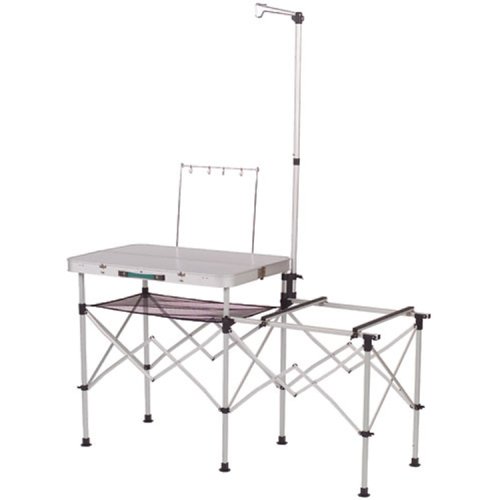
Coleman Pack-Away Portable Camp Kitchen, Outdoor Folding Table
As an Amazon Associate we earn from qualifying purchases. Product prices and availability are accurate as of the date/time indicated.

CampLand Folding Camping Kitchen Table with Windscreen,Portable Outdoor Cooking Station with Storage Cabinet & Side Tables Heavy Duty Camp Cook Station for Camping & BBQ (Black)
As an Amazon Associate we earn from qualifying purchases. Product prices and availability are accurate as of the date/time indicated.

VEVOR Camping Kitchen Table, Folding Outdoor Cooking Table with Storage Carrying Bag, Aluminum Cook Station 1 Cupboard & Detachable Windscreen, Quick Set-up for Picnics, BBQ, RV Traveling, Black
As an Amazon Associate we earn from qualifying purchases. Product prices and availability are accurate as of the date/time indicated.
Stated burner count and output, surface dimensions and their stated parish, folded dimensions and weight, storage and organiser parish, and materials are each maker’s specification for the current exact product, and a retreat system’s capacity is governed by its menu, its crew, and its water and waste parishes rather than by any single product’s claims. Prices are typical street ranges as described; a retreat kitchen is a system of stations, coolers, water, and waste pieces that should be priced whole from a menu. Ratings reflect retreat suitability: a station that holds its parish at a headcount’s volume, a structure and surface a crew can work across a weekend, transport and rigging a team can rehearse, and value for an organisation that will be judged, by its own people, at every meal.
Detailed Reviews: Best Camp Kitchen for Corporate Retreats Outdoors Picks
1. Camp Chef Expedition Parish – Best Overall
Camp Chef’s expedition parish leads because a retreat’s cooking line is its engine, and this parish was built for volume in the open air: burners in a count and an output its maker states for parallel dishes, in a system whose tables and windscreens are a working line’s parish entire. For a retreat that must feed a headcount on an agenda, it is the first purchase.
Let its fuel and its fire parish be governed by its maker’s pattern and its land’s current rules, read from their sources. A Camp Chef line so governed will produce a retreat’s hot food as a utility rather than as a drama, and a retreat whose meals arrive as utilities has freed its whole agenda for the purposes it was actually convened for.
2. GCI Folding Parish – Best Station System
GCI’s folding kitchen parish competes on the station as a designed object: surfaces, storage, and a fold in its maker’s pattern that turns a vehicle’s load into a working parish in minutes. For a retreat whose kitchen must be rigged by its crew rather than by a venue, that design is time, and time is an agenda’s currency.
Rehearse its rigging with the crew who will do it, before the retreat. A GCI system so rehearsed will stand up at a site as a liturgy rather than as a puzzle, and a kitchen that stands quickly leaves its crew’s patience for the parishes that cannot be rehearsed, of which a retreat, like a family, has a guaranteed supply.
3. Lifetime Table Parish – Best Surfaces
Lifetime’s table parish is the retreat kitchen’s unsung infrastructure: serving and preparation surfaces in sizes a line can be built from, at prices an organisation can buy in the count a headcount requires. For a serving parish that must flow one way and never improvise, its tables are the floor plan.
Buy them in the count the menu’s stations require, not the count a vehicle finds convenient. A Lifetime line so provisioned will never ask a guest to balance a retreat’s reputation on a knee, and an organisation that understands a serving line as architecture has understood catering’s first and least photogenic truth.
4. Coleman Parish – Best Value System
Coleman’s kitchen parish offers a retreat on a budget a system in one maker’s keeping — a kitchen and stove parish in its pattern — at a value that leaves an organisation its budget for the food, the crew, and the parishes that actually decide a retreat’s memory. For a first retreat kitchen, it is the sensible foundation.
Let its savings be spent in the open, on water, waste, and a thermometer’s parish. A Coleman system so supported will feed a retreat as safely as any row in this table, because a kitchen’s safety lives in its disciplines, and its disciplines, unlike its surfaces, cannot be bought at a premium or excused at a discount.
5. REI Organisation Parish – Best Transport
REI’s organisation parish serves the retreat whose kitchen travels: organisers and kitchen pieces in its pattern that keep a system’s thousand small citizens — its utensils, its spices, its labels, its thermometer — in addressed parishes between a store room and a site. For a recurring retreat, that organisation is the difference between a system and a pile with a history.
Let every organiser be assigned its parish and its list. An REI system so governed will load, rig, and strike as one considered institution, and an organisation that can strike its kitchen in an hour has learned the retreat’s last lesson, which is that an event ends when its kitchen does and not a minute before.
6. Eureka Parish – Best Compact
Eureka’s camp parish closes the table in the compact country: a kitchen parish for a smaller retreat or an off-grid programme whose vehicle and whose crew are honestly sized. For a retreat that travels light, its parish is proportion itself.
Let its menu be sized to it, as this article’s menu counsel directs for every row. A Eureka kitchen so fed will serve its retreat without a queue or a crisis, and a system whose ambition and capacity were introduced to each other in a planning meeting will never have to be introduced, in weather, at a breakfast, by an organiser in an apron.
Buying Guide: Choosing the Best Camp Kitchen for Corporate Retreats Outdoors
Write the menu from the headcount and the dietary parish, then buy stations to the menu
Confirm the retreat’s headcount with a margin, collect its dietary and allergen parish in writing, and write a menu whose dishes your crew can execute outdoors at that volume, inside the agenda’s windows, in the forecast’s worst parish as well as its best, then buy the system to the menu: a cooking parish with the parallel burners the dishes require, preparation and serving surfaces in the count the line requires, a coffee country of its own, coolers for the cold parish, and water, washing, and waste parishes counted from the headcount and the days. Confirm, from their own current sources, the land’s and the venue’s rules for fire, waste, water, and any food parish your event engages, and your own country’s current food guidance for the temperatures, separations, and hygiene your kitchen will keep, and price the whole system — equipment, crew’s parish, consumables, and waste — as one catering institution, because a retreat kitchen’s budget, like its menu, should contain no surprises that a planning meeting could have prevented.
Staff it by name and rota, govern its temperatures and its allergens as promises, rehearse its rigging
Appoint a kitchen keeper and a crew by name, on a written rota that covers every meal and every washing parish, and teach every hand in it the system’s liturgies before the retreat: hand washing in its own station’s parish, raw and ready separations, a thermometer’s use in a named person’s hand, an allergen parish labelled at the line and answerable by a person with the menu’s documents. Rehearse the kitchen’s rigging and striking with its crew, at the office or in a yard’s parish, timed, because a retreat’s first breakfast is not a rehearsal and its organiser should not be its only trained citizen. Keep a retreat kitchen log — quantities used, a parish that ran short, a dish that queued, a guest’s question that could not be answered — because an organisation that retreats annually owns, in that log, the specification for every future kitchen it will ever buy, written in the only ink that never flatters.
Strike it entire, waste and all, and let the land be inspected as the kitchen’s last station
Plan the striking as carefully as the rigging: a final meal whose parish consumes what a cold chain cannot carry home, a washing and waste parish discharged under the land’s current rules, a grey water and food waste country emptied in its governed parish, and a site inspected, by the kitchen’s keeper and the retreat’s organiser together, as the event’s last station, because a corporate retreat’s reputation in a countryside includes the condition in which it left that countryside, and an organisation’s hosts, landowners, and venues remember a clean strike longer than a fine dinner. Clean and dry every piece entire before it is stored, in its makers’ parishes, inventory it against its list, and store the system as the institution it has become, ready to be loaded by its documents rather than by a memory. The best camp kitchen for corporate retreats outdoors is finally an agenda kept and a promise honoured: a menu written, a line that flows, a guest’s question answered — and any kitchen in this table, bought by that menu, staffed by that rota, and struck by that inspection, will let an organisation feed its people in the open air at a standard its own dining room would sign, which is the whole and sufficient ambition of a retreat.
Top Picks for Feeding a Large Group Outdoors
Feeding dozens of people calls for multiple burners, a griddle, and plenty of cold storage. These items scale up to a group meal without a full commercial kitchen, and they set up quickly on a flat site.
Camp Chef Explorer 2-Burner Outdoor Camping Stove
A two-burner propane stove rated at 60,000 total BTUs. A pair of burners lets one pot boil while another simmers a sauce, and several units side by side can cover a bigger menu.
As an Amazon Associate we earn from qualifying purchases at no extra cost to you.

Camp Chef Mountain Series Kodiak Two-Burner Stove
A two-burner stove with 10,000 BTU per burner. It adds extra capacity when you set up more than one cooking station, so more than one cook can work at the same time.

Igloo Polar 120 Qt. Cooler
A large cooler listed to hold about 188 cans. A big chest like this keeps drinks and ingredients together for a bigger crowd, which cuts down on trips back to the vehicle during the event.

Blackstone 1814 Propane Gas Griddle, 17 Inch
A tabletop griddle that handles pancakes, burgers, and eggs on a flat surface. A flat top speeds up cooking for a large group, especially for a breakfast service with a long line.

Camp Chef Professional Fry Griddle, 14 Inch
A griddle accessory that fits Camp Chef two-burner stoves. It lets you swap grates and turn the same stove into a breakfast station, so one piece of kit serves several meals.

Frequently Asked Questions About the Best Camp Kitchen for Corporate Retreats Outdoors
What is the best camp kitchen for corporate retreats outdoors?
Camp Chef’s expedition parish leads this table overall as a retreat’s cooking line, with GCI’s parish as its folding station system, Lifetime’s tables as its serving and preparation surfaces, Coleman’s parish for value, REI’s parish for organisation and transport, and Eureka’s parish for a compact retreat. The best system for your retreat is bought from its menu rather than from this table: a headcount confirmed and margined, a dietary and allergen parish collected in writing, dishes your crew can execute outdoors at volume inside your agenda’s windows, and stations — cooking, preparation, serving, washing and waste — bought, staffed, and rehearsed to that menu. Confirm your land’s and venue’s current rules and your country’s food guidance from their own sources, govern temperatures and allergens by named people with written documents, and let the retreat be judged, as it will be, at its meals, by a kitchen that was planned in an office and therefore never had to be improvised in a field.
How much camp kitchen equipment does a corporate retreat need?
As much as its menu, its headcount, and its agenda require, counted station by station rather than bought as a set: a cooking parish that can run the menu’s dishes in parallel, preparation surfaces for every pair of hands the menu employs, a serving line long enough to clear the headcount inside its window, a coffee and hot drinks parish of its own, coolers for the whole cold parish, and water, washing, and waste capacity counted from the headcount and the days, with utensils and consumables margined for weather and loss. The two parishes retreats most often under-buy are the two in this article’s experience that decide them: water and waste, whose absence is discovered at a first washing-up by forty people, and a staffed rota, whose absence is discovered at the same moment by the organiser. Count from your own documents, rehearse with your own crew, and let a professional caterer’s parish enter the conversation at the headcount where your honest count says it should, because an organisation’s judgement about its own capacity is the first dish every retreat serves.
How do we handle dietary requirements and allergies at an outdoor retreat kitchen?
As written promises, governed by people and documents rather than by intentions. Collect every guest’s dietary and allergen parish in advance, in the retreat’s own form, write the menu so those parishes are served with dignity rather than as an afterthought, and carry the information to the serving line entire: dishes whose ingredients the person serving them can state, labels that a guest can read without asking, a preparation and serving separation for the parishes that require it in your country’s current food guidance, read from its source, and a named person at every meal who can answer a question from the menu’s documents. Keep raw and ready parishes separated, temperatures governed by a thermometer in a named hand, and hands washed in their own station’s parish, because a retreat kitchen’s food safety is an institution’s and its guests did not choose it — they trusted it. A retreat that governs this parish well will be remembered for it by exactly the guests whose trust was hardest to earn, and an organisation has no better advertisement, among its own people, than a promise kept at a buffet in a field.
What are the biggest mistakes organisations make with a retreat camp kitchen?
Buying equipment before writing a menu, which purchases stations for meals that do not exist; under-counting water, ice, and waste, whose parishes are invisible in a planning meeting and absolute in a field; staffing by volunteer, which crews a kitchen, at the breakfast that matters, with its organiser alone; and treating food safety and allergens as a family’s informal parish at an institution’s scale, which is the one mistake in this list that cannot be laughed about afterward. Each is prevented by the same small liturgy this article prescribes: documents before purchases, quantities counted from a headcount with a weather margin, a crew appointed by name on a rota, temperatures and allergens governed by named people, the land’s and the venue’s rules read from their own sources, and a rehearsal, with the real crew and the real system, before the retreat. A corporate retreat is an organisation performing itself in public, to its own people, three times a day, and its kitchen is the stage on which that performance is least forgiving — which is why the organisations that feed their retreats well are remembered, by their people, as competent at everything else as well.
Related guides
- Best Hammock Stand for Camping in 2026: Kammok Swiftlet, ENO Nomad, Tensa4, YOBOgear Cricket, Vivere Steel Stand, and ENO SoloPod Compared for Campsites Without Trees, Packed Weight a Car Forgives, Setup on Uneven Ground, and a Hang Height That Forgives Beginners
- Best Premium Cooler for Car Camping in 2026: YETI Tundra 65 and Tundra Haul, Canyon Outfitter 55, Orca 58, RTIC Ultra-Light 52, and Dometic CFX5 Powered Cooler Compared for Ice Days That Are Actually Comparable, Loaded Weight Two People Can Carry, and Wheels Against Lifts
- Best Coolers for Beach Trips in 2026: Best Coolers for Beach Trips
- Best Complete Camp Cooking Starter Kit in 2026: Best Complete Camp Cooking Starter Kit
More from Amazon
Programs that pair well with the guide above. Offers and eligibility are set by Amazon and may change.
Free shipping on eligible items, Prime Video and more. Eligible new members can start with a free trial.
Start a Prime free trialA Prime membership for ages 18-24 with a trial period. Eligibility is set by Amazon.
See Prime for Young AdultsAudiobooks and podcasts to listen to on the go. Eligible new members can start with a free trial.
Try Audible freeAd-free music streaming. Eligible new subscribers can start with a free trial.
Try Music Unlimited freeAs an Amazon Associate we earn from qualifying purchases.

Write Your Review
No reviews yet. Be the first to share your experience!