
What's inside
- Best Premium Cooler for Car Camping: Ice Claims, Translated
- Quick Comparison: Best Premium Cooler for Car Camping Models
- Detailed Reviews: Best Premium Cooler for Car Camping Picks
- Buying Guide: How to Choose the Best Premium Cooler for Car Camping
- Frequently Asked Questions About Best Premium Cooler for Car Camping
As an Amazon Associate I earn from qualifying purchases. This post may contain affiliate links at no extra cost to you.
A premium cooler earns its price in a car camp in a currency a laboratory cannot mint: the fifth day’s cold drink, the steak that stayed a steak through a hot drive and a hotter week, the lid a child can stand on, the latch that still seals in its seventh season, and the absence, across a whole holiday, of the ice run, that twenty-mile round trip to a petrol station’s freezer that has eaten more camping afternoons than rain. The best premium cooler for car camping is therefore not the cooler with the longest ice claim on its box, because ice claims are the least comparable figures in outdoor retail, each maker’s days measured in its own test with its own ice, its own ambient, and its own definition of done. It is the cooler whose capacity fits the party and the vehicle, whose loaded weight the household can actually move, whose insulation and seal are built to the rotomoulded standard the premium tier exists for, and whose ownership, drains, latches, hinges, gaskets, and the maker’s parts and warranty behind them, is measured in decades. This guide compares the current premium field on those terms, and it includes, deliberately, one powered cooler, Dometic’s CFX class, because at the premium tier the honest question is no longer which box, but whether the household’s camping has quietly become the kind that should plug in.
Capacity is the first decision and the most commonly botched, in both directions. A cooler too small forces the ice run it was bought to prevent and packs food against its own cold until the top layer lives in the danger zone’s neighbourhood; a cooler too large rides half empty, its air volume taxing its ice at every opening, and arrives at the carry as a two-person lift of mostly weather. The working arithmetic the experienced use, in the makers’ stated volumes translated honestly, is to size for the party’s food and drink plus the ice that food requires, roughly a third to a half of the cooler’s volume given to ice in a week’s pattern, and to remember that a maker’s quart figure is a mould’s total and not a menu, so the household’s real shop, its bottles’ shapes, its trays and tubs, should be imagined inside the stated dimensions before the order. Car camping forgives weight that a boat or a backpack would not, but it does not forgive it entirely, because the cooler still travels from the car’s boot to the pitch’s shade a dozen times a trip, commonly loaded, commonly across grass, gravel, and a slope, and the table therefore grades the carry as a first-class specification, handles, wheels, and loaded weight in the makers’ figures, rather than as an afterthought for the strongest member of the party.
The products compared here are real, currently sold premium coolers from YETI, Canyon, Orca, RTIC, and Dometic, in the 45 to 65 quart class that serves a family or a group across a long weekend to a week. They are graded on insulation substance and seal as built, rotomoulded walls and pressure-injected insulation in the makers’ stated constructions, freezer-grade gaskets in their designs; honest capacity and its internal shape for real food; the carry, handles rated for the loaded lift, wheels where fitted in their makers’ patterns; durability furniture, latches, hinges, drain, and feet, and the parts’ availability behind them; and the powered alternative’s whole case, compressor cooling to a set temperature in its stated provisions, against its price, its power appetite, and the battery question it brings with it.
Our Top Picks
 A-Premium 12 Volt Refrigerator 48QT/45.6L Portable Car Fridge48QT/45.6L18.11 x 27.99 x 19.92 inchesCheck on Amazon
Best Premium Cooler for Car Camping: Ice Claims, Translated
Why Days of Ice Cannot Be Compared, and What Can
Every premium cooler in this table will hold ice for days, and the differences among them in a fair test are smaller than the differences among the households testing them, which is why this guide declines to rank them by a figure no two makers measure alike. Ice retention is a system, and its variables belong mostly to the owner: the cooler pre-chilled or loaded warm from a garage; the ice’s form, blocks outlasting cubes outlasting the loose bag’s slush by margins that dwarf the boxes’ differences; the fill, a cooler packed full with cold goods and ice in its voids outlasting the same cooler a third empty; the openings, each one a trade of the inside’s cold for the outside’s weather, a children’s drinks cooler opened forty times a day living a different life from the food cooler opened at meals; and the site’s shade, a cooler in a car’s hot boot or a pitch’s full sun spending its ice on the afternoon regardless of its walls. The buyer who understands that paragraph shops for the things that are the maker’s: wall and insulation substance in the stated construction, a gasket that seals with a sigh rather than a hope, a lid that does not flex its seal open under a sitter’s weight, and a drain that empties the melt without tipping the week’s food into the grass. The rest is technique, and the buying guide teaches it as part of the purchase, because a premium cooler used carelessly is an ordinary cooler with a distinguished accent.
The powered cooler deserves its translation in the same section, because it changes the subject entirely. A compressor cooler of Dometic’s CFX class in its makers’ provisions does not hold ice at all; it refrigerates, holding a set temperature, fridge or freezer in its stated range, for as long as power lasts, which in a car camp means a running vehicle’s alternator on the move and, at the pitch, a battery, a power station, or a hookup whose capacity becomes the trip’s new budget. Its gifts are absolute, no melt, no danger-zone arithmetic, ice cream in a heatwave, a week’s food held at a fridge’s honesty, and its costs are the premium tier’s highest ticket, a power discipline this site’s camping coverage teaches in its battery guides, and a machine’s failure modes where the passive box has none. For the camper whose trips are long, hot, and food-serious, a tourer feeding a family from a base for a fortnight, it is increasingly the correct premium answer. For the long-weekend household, it is a magnificent solution in search of their problem, and the table rates it as the specialist it is rather than as the default its novelty argues for.
Wheels, Handles, and the Loaded Carry
The carry decides more premium purchases than the insulation does, because it is experienced on every trip while the fifth day’s ice is experienced on the trips that reach a fifth day. A loaded 65 quart cooler, ice, food, and drink aboard, weighs in the region of a large adult’s checked luggage doubled, in the makers’ empty figures plus the load’s arithmetic, and it moves by its handles, rope or moulded in the makers’ patterns, in a two-person carry whose comfort is a design property: handles that take a full hand, that do not roll or bite, positioned so the box hangs level rather than dragging its corner. Wheels, in the Tundra Haul pattern in this table, change the carry’s physics on the surfaces wheels understand, the car park, the path, the hard standing, and surrender on the surfaces they do not, wet grass, sand, and the slope to the pitch, where the wheeled cooler is lifted anyway, by handles that must therefore be as good as its wheels. The household’s honest audit is of its own pitches and its own people: who carries, how far, over what, and whether the cooler lives in the car’s shade beside the pitch, the car camper’s great cheat, which reduces the carry to the boot’s edge and makes the largest passive boxes in this table a pleasure rather than a regimen.
Furniture is the premium tier’s other substance, and it should be handled in the shop like a door’s hinges. Latches that close with authority and open with cold, wet hands; a hinge that is a pin or a moulded barrel in the makers’ designs rather than a living fold of plastic; a drain whose cap is tethered and whose thread is coarse enough to clear; feet that grip a tailgate and a table rather than skating on both; and a gasket that is replaceable in the maker’s parts pattern, because the gasket is the cooler’s one true wear part and a maker who sells it separately has told you the box is meant to be kept. Tie-down and lock provisions in the designs serve the vehicle’s security and, in bear country, the certified patterns in the makers’ stated terms serve the place’s rules, which are the authority wherever they apply and are checked before the trip rather than argued at the trailhead.
Quick Comparison: Best Premium Cooler for Car Camping Models
| Model | Capacity, Construction and Key Specs | Best For |
|---|---|---|
| YETI Tundra 65 | Rotomoulded cooler in YETI’s line, stated capacity class, pressure-injected insulation in maker’s terms, freezer gasket design, rope handles | Best premium cooler for car camping overall |
| Dometic CFX5 55IM Class | Powered compressor cooler in Dometic’s line, stated fridge and freezer range, vehicle and mains provisions in maker’s terms | Best powered, no ice |
| Canyon Outfitter 55 | Rotomoulded cooler in Canyon’s line, stated capacity class, insulation and gasket provisions in maker’s terms | Best ice and value in premium |
| YETI Tundra Haul | Wheeled rotomoulded cooler in YETI’s line, stated capacity class, wheel and handle design in maker’s pattern | Best wheeled carry |
| Orca 58 Quart | Rotomoulded cooler in Orca’s line, stated capacity class, insulation and latch provisions in maker’s terms | Best supported premium |
| RTIC Ultra-Light 52 | Rotomoulded-class cooler in RTIC’s line, lighter stated weight pattern in maker’s terms, stated capacity class | Best lighter premium |
A-Premium 12 Volt Refrigerator 48QT/45.6L Portable Car Fridge Cooler | -4°F~68°F Separated Zone Portable Freezer with 12/24V DC & 110/240V AC Adapter for Car Camping Truck RV Travel


As an Amazon Associate we earn from qualifying purchases. Product prices and availability are accurate as of the date/time indicated.

EKOJUCE 12V Refrigerator 85QT Portable Freezer with Wheels | Electric Cooler, -4°F~68°F Car Fridge, 12/24V DC & 100-240V AC for Truck, RV & Camping
As an Amazon Associate we earn from qualifying purchases. Product prices and availability are accurate as of the date/time indicated.
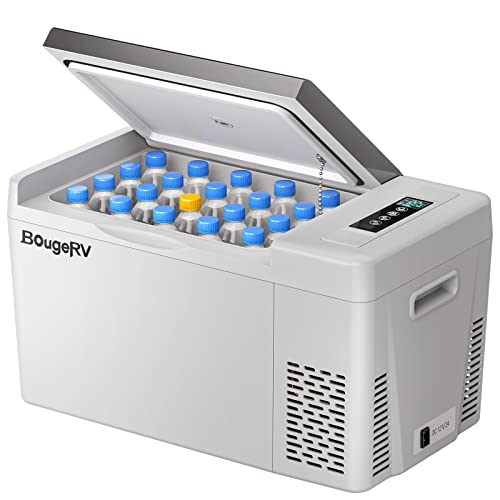
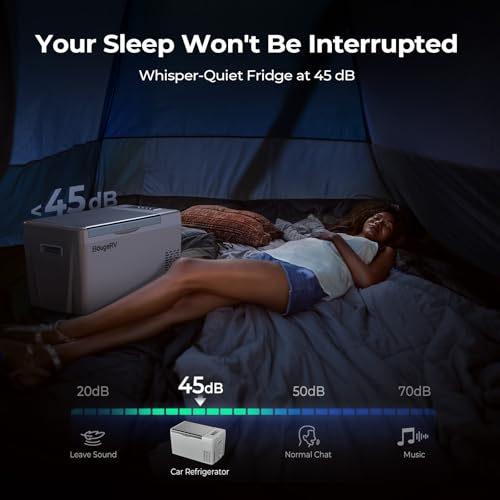
BougeRV 12v refrigerator 23 Quart, -8℉~50℉ Portable Freezer for Car, Grey | No Ice Needed, Use as Fridge or Freezer, Fast 15-Min Cool to 32°F, 12/24V DC, 110V AC, Electric Cooler for Camping, Road Trip



As an Amazon Associate we earn from qualifying purchases. Product prices and availability are accurate as of the date/time indicated.
Prices shown are approximate and for reference only. Prices change often, so please check the current price on Amazon before you buy.
Stated capacity and its measurement basis, internal and external dimensions, empty weight, insulation and gasket construction, handle and wheel provisions, drain and latch design, bear certification where a maker states it, power provisions for the powered model, and warranty are each maker’s stated details for the current version. Ice retention is not tabulated because makers test it by incompatible methods, and this guide grades insulation by construction and by the technique its buying section teaches. Ratings are editorial for car camping: insulation substance and seal, honest capacity for real food, the loaded carry, furniture and parts, and value across a decade’s seasons.
Detailed Reviews: Best Premium Cooler for Car Camping Picks
1. YETI Tundra 65 – Best Overall
YETI’s Tundra 65 takes the overall rating as the premium pattern in its complete form in its line: rotomoulded substance, a seal that closes like a fridge’s, furniture that survives the decade, a size that feeds a family across a long weekend into a week with ice discipline, and a parts and accessory world in its maker’s pattern that treats the box as a kept object. It is the cooler the category is measured against because, across seasons, it keeps measuring up.
Its loaded carry is a two-person honesty, as the table charges. As the default premium, it stands.
2. Dometic CFX5 Class – Best Powered
Dometic’s compressor cooler is the premium tier’s other answer in its line: a set temperature held without ice in its stated provisions, fridge or freezer at the dial, for the tourer whose trips are long and hot and whose power budget, vehicle, power station, or hookup in the patterns this site’s battery coverage teaches, is planned as carefully as the menu. Where those conditions hold, it does not merely beat the passive boxes; it changes the subject.
Its price and its power appetite are its terms, stated openly. For its camper, it is the finest object in this guide.
3. Canyon Outfitter 55 – Best Ice and Value
Canyon’s Outfitter presses the premium construction down the price ladder in its line, with insulation and sealing in its terms that owners’ long weekends keep confirming, in a size that suits the family car and the week’s shop. For the buyer who wants the rotomoulded substance without the flagship’s ticket, it is the arithmetic’s answer and this guide’s value rating in the tier.
Its accessory world is smaller than the leader’s. As substance per money, it is formidable.
4. YETI Tundra Haul – Best Wheeled
The Haul puts the Tundra pattern on wheels in its line, and for the household whose pitches are reached by path and hard standing, whose carriers are a parent and a grandparent rather than two rugby players, that single change is worth more than any increment of insulation in this table. Its handles still serve the lifts wheels cannot, as the guide’s doctrine requires.
On sand and wet grass it is a lifted cooler like any other. On its own ground, it is the kindest carry here.
5. Orca 58 – Best Supported Premium
Orca’s cooler serves the buyer who reads a warranty as a specification in its line, a rotomoulded box of sound stated construction behind a maker’s support pattern that this guide’s readers weigh heavily, in a size between the table’s poles that many families will find is their exact shop. Its whole ownership is its argument.
Its furniture is a half step plainer than the leader’s. As the supported decade, it earns its place.
6. RTIC Ultra-Light 52 – Best Lighter Premium
RTIC’s Ultra-Light answers the carry’s complaint inside the premium construction in its line, a stated weight pattern meaningfully kinder than the classic rotomoulded boxes, in a capacity that suits the couple and the small family, at the tier’s friendliest price. For the household whose strongest carrier is also its cook, its grams are a feature no ice figure outranks.
Its insulation margin is its weight’s trade, honestly made. As the lighter premium, it completes the table with sense.
Buying Guide: How to Choose the Best Premium Cooler for Car Camping
Size It by the Shop, Carry It in the Shop, Then Decide About Power
Shop with your own evidence. Write the trip’s real shop, the long weekend’s and the week’s, in bottles, trays, and tubs, and set it against each candidate’s internal dimensions in the maker’s figures, allowing a third to a half of the volume for ice on the longer pattern, because a cooler sized by its quart headline alone will betray the first packing. Then carry the finalist, in the shop, loaded if the retailer allows a simulation, by its handles, twenty paces and a turn, and let the household’s actual carriers, not its strongest, give the verdict; where the carry fails, the wheeled pattern or the lighter pattern in this table is the correction, and where the cooler will live at the car’s side in the pitch’s shade, record that mercy in the audit and buy the size the food requires. Decide the powered question last and on the trip’s evidence: length, heat, hookup or power station already owned, a menu that suffers in melt water, each a vote for Dometic’s class; weekends, simplicity, a vehicle that sleeps when the camp does, each a vote for the passive boxes and their glorious absence of a power budget.
Refuse the premium tier’s two false economies in the same pass. The oversized flagship bought for the one annual week and resented across ten weekends, its half-empty air taxing its ice and its carry taxing its owners, where the table’s middle size and a cheap second drinks cooler would have served both patterns better, since two coolers, food and drinks, opened at their own rhythms, is the experienced household’s actual system and the single largest ice saving available at any price. And the premium ticket spent on a box whose maker’s parts, gaskets, latches, drains, cannot be had, because a premium cooler is a decade’s object and a decade includes a gasket.
The Technique That Makes It Premium in Practice
Commission the cooler like a fridge. Pre-chill it the night before with sacrificial ice or the household’s frozen bottles, because a warm box spends its first bag of ice becoming cold itself. Freeze what the menu allows at home, pack in the order of use with the last day’s food deepest, fill every void with ice, blocks below and cubes above in the pattern experience teaches, and keep a frozen bottle’s discipline for the drinks cooler so the food cooler opens at meals and not at thirsts. Site it in the pitch’s shade and the car’s shade before that, off hot ground on its feet or a mat, and drain the melt on the long trip only as the food’s safety pattern requires, cold melt water being an insulator’s friend and a salad’s enemy, a judgement the cook makes by contents rather than by dogma. Keep the danger zone’s rule absolute in camp as at home, perishables cold means properly cold, and a cooler whose contents have warmed into doubt is emptied of the doubt, not of the responsibility, because no steak is priced against a family’s health.
Maintain the box as the decade’s object it is: washed and dried with its lid ajar in storage so its gasket rests uncompressed and its interior stays sweet, its latches and drain inspected at the season’s turn, its gasket replaced from the maker’s parts when its sigh becomes a shrug. Review the purchase at the first long trip’s end against the log that matters, ice remaining, food condition, carries cursed or praised, and let that evidence tune the system, a second small cooler, a wheel’s verdict, a power station’s first vote, rather than the catalogue’s appetite. Do that, sized by the shop, carried in the shop, powered only on evidence, and packed and sited like a fridge with a view, and the best premium cooler for car camping becomes what its price promised in the first place: not a box that holds ice, but a week’s cold certainty, standing in the shade at the pitch’s edge, opening at mealtimes on food exactly as it was packed, while the ice run, that old thief of afternoons, is forgotten by everyone except the petrol station.
Frequently Asked Questions About Best Premium Cooler for Car Camping
What is the best premium cooler for car camping?
YETI’s Tundra 65 is the best overall passive cooler for its rotomoulded substance, seal, furniture, and parts support, with Canyon’s Outfitter 55 the premium value in ice substance, YETI’s Tundra Haul the wheeled answer where paths allow, Orca’s 58 the supported decade, and RTIC’s Ultra-Light 52 the lighter premium. Dometic’s CFX5 class is the best powered alternative, holding a set fridge or freezer temperature without ice, for long, hot trips with a planned power budget. Size by your real shop rather than by the quart headline, allowing a third to a half of the volume for ice on a week’s pattern, carry the loaded finalist before you buy it, and consider the experienced household’s system, a food cooler opened at meals and a smaller drinks cooler opened at thirsts, which saves more ice than any difference between the boxes in this table.
How long will a premium cooler really hold ice?
Days, and the honest number belongs to your technique more than to the box. Makers’ ice claims are measured by incompatible tests and cannot be compared across brands, which is why this guide grades insulation by construction, wall substance, injected insulation, and a freezer-grade seal, rather than by a days figure. In a household’s real service, a premium rotomoulded cooler, pre-chilled, packed full with block and cube ice in its voids, sited in shade, and opened at meals, serves a long weekend without anxiety and a week with discipline, while the same cooler loaded warm, a third empty, left in a hot car, and opened forty times a day for drinks can be a two-day object. The variables in that sentence are all the owner’s, which is the good news: the technique in this guide’s buying section, pre-chill, freeze the menu, fill the voids, two coolers for food and drinks, shade always, is worth more days than the price difference between any two rows in the table.
Is a powered cooler better than a rotomoulded cooler for car camping?
For long, hot, food-serious trips with a planned power supply, yes, and for the ordinary long weekend, no, and the trip’s evidence should decide rather than the technology’s glamour. A compressor cooler of Dometic’s CFX class holds a set temperature indefinitely on power, fridge or freezer, with no melt, no ice runs, and no danger-zone arithmetic, which transforms a fortnight’s touring, a heatwave’s family camp, or a menu built on frozen goods. Its costs are the tier’s highest price, a continuous power appetite that must be budgeted from the vehicle, a power station, or a hookup, with the battery discipline this site’s camping coverage teaches, and a machine’s failure modes where a passive box has effectively none. A rotomoulded cooler asks for ice and technique and gives back silence, simplicity, and independence from every socket. Households that camp both ways commonly end with both, the powered box for the great tour, the passive for the weekends, and neither purchase shames the other.
What size cooler does a family need for car camping?
For a family of four, the 55 to 65 quart class in this table is the working answer for a long weekend into a week, with the final size set by the household’s real shop rather than by the class’s headline. Translate the stated capacity honestly: the maker’s figure is the mould’s total volume, and a week’s pattern gives a third to a half of it to ice, so the food’s share is the remainder, to be imagined in bottles, trays, and tubs against the internal dimensions the maker publishes. A couple or a small family lands in the 45 to 55 class, a group or a week-plus expedition in the 65 and beyond, and two further rules govern the edges: two coolers, a food cooler and a smaller drinks cooler, beat one large one for ice life at any party size, because the drinks door is the one opened all day; and the loaded carry is a size limit in itself, since a cooler the household cannot move loaded will be packed half, parked badly, and cursed accurately. Buy the size the shop requires and the carriers can lift, in that order, and let the second cooler, not the bigger mould, absorb the growth.
Related guides
- Best Battery Powered Coolers in 2026: Dometic, BougeRV, Alpicool, and ICECO Compared for a Cold Proven on a Thermometer at Dawn, Watt-Hours Summed Against the Trip’s Whole Budget, and a Compressor’s Parish Named Honestly Against the Thermoelectric’s
- Best Camping Gear for Kayaking in 2026: Sea to Summit, NRS, Watershed, and AquaQuest Compared for Gear That Rides Dry in Its Own Parish of the Hull, a PFD Worn and a Float Plan Filed, and Food Stored by Each Shore’s Own Rules
- Best Hammock for Beginners Low Budget in 2026: 7 Hammocks That Offer Easy Setup, Good Comfort, and Reliable Performance for Beginners on a Low Budget
- Campsite Mattress Buying Mistakes Avoid: 7 Campsite Mattress Buying Mistakes Avoid in 2026
More from Amazon
Programs that pair well with the guide above. Offers and eligibility are set by Amazon and may change.
Free shipping on eligible items, Prime Video and more. Eligible new members can start with a free trial.
Start a Prime free trialA Prime membership for ages 18-24 with a trial period. Eligibility is set by Amazon.
See Prime for Young AdultsAudiobooks and podcasts to listen to on the go. Eligible new members can start with a free trial.
Try Audible freeAd-free music streaming. Eligible new subscribers can start with a free trial.
Try Music Unlimited freeAs an Amazon Associate we earn from qualifying purchases.

Write Your Review
No reviews yet. Be the first to share your experience!